
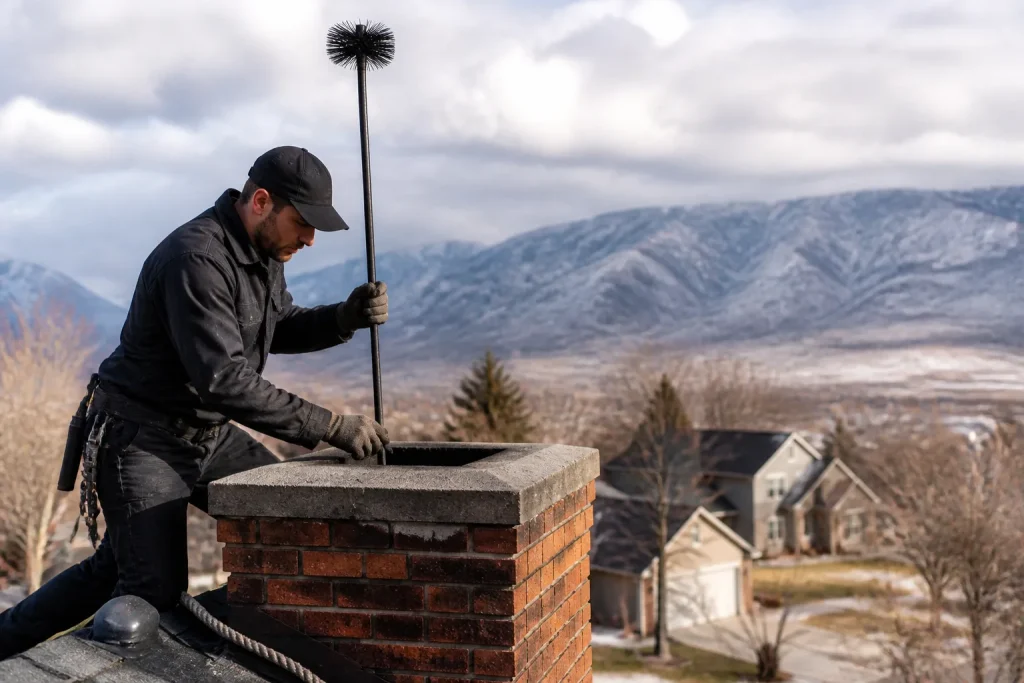
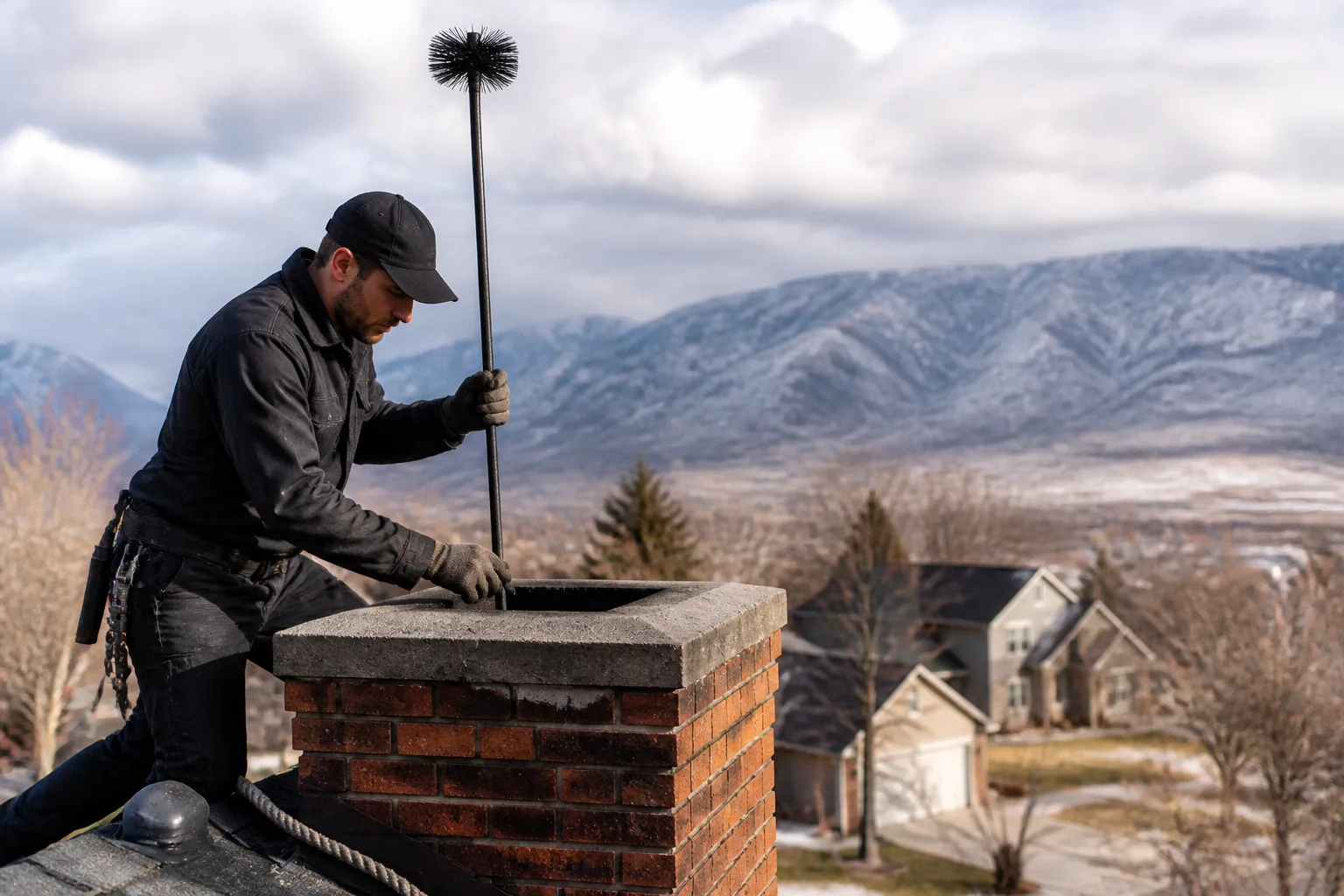
Emergency Chimney Sweep Near Me: What Tooele Homeowners Should Do First
The number-one mistake after a chimney fire or a smoke backdraft isn’t failing to call a sweep. It’s reopening the damper to “air things out,” which feeds oxygen to embers that haven’t fully extinguished. Before you touch anything, know which situation you’re in: an active flue fire, a smoke problem, or an animal in the flue. Each one calls for a different first move, and the wrong one costs you. If you’d rather hand it to a specialist, call (877) 792-7216.
Key Takeaways
- Close the damper and get everyone out if smoke is filling the room. Call 911 first when there’s an active fire.
- Never pour water into a hot firebox. It can crack firebrick and warp metal.
- Photograph everything before anyone cleans or repairs. Utah fire damage claims go smoother with a visual record.
- Not every scare is an emergency. A heavy smoke smell or a bird in the flue is urgent, not dangerous, and can be scheduled.
- Tooele’s elevation and dry winters speed up creosote buildup. More creosote means more flue fire risk than along the Wasatch Front.
What Actually Counts as a Chimney Emergency in Tooele?
A chimney emergency is an active fire in the flue, smoke pouring into living space, or a structural collapse risk. A strong smoke smell, a soot stain, or an animal trapped in the chimney is urgent but not an emergency. Most guides lump all of these together, and that’s where homeowners get confused and panic.
Here’s how we sort it when a Tooele homeowner calls:
- Genuine emergency: Flames or loud roaring from the chimney top, dense smoke backing into the room, or a chimney that’s visibly cracked or leaning after a flue fire. Get out and call 911.
- Urgent, not dangerous: Heavy creosote smell, a puff of smoke on startup, or soot on the fireplace face. Book a chimney sweep and stop burning until it’s inspected.
- Annoyance that can wait: A bird or squirrel in the flue, a draft that’s weaker than usual, or a damper that sticks. These get scheduled, not rushed.
Tooele sits at about 5,000 feet, and that changes the picture. Thin air means wood burns less completely than it does down in the valley, and incomplete combustion lays down creosote faster. Dry Tooele winters pull moisture out of seasoned wood and then swing hard on temperature, which stresses masonry. In our experience, a flue here can build a dangerous creosote layer in a shorter stretch of burning than homeowners expect. That’s why the annual sweep matters more in Tooele than the “every couple of years” advice you’ll read online.
What Should You Do in the First 30 Minutes?
Close the damper, get people and pets out, and call 911 if there’s an active fire. Do not open the damper to air the room out, and do not throw water on a hot firebox. Those two moves cause most of the secondary damage we see after a flue fire.
A calm sequence, in order:
- Get everyone outside if smoke is filling the room or you can see flames at the chimney top. Call 911 from outside the house.
- Close the damper if you can reach it safely. That starves the flue of the oxygen feeding it. This is the opposite of what feels natural, which is why it tops the list.
- Don’t use water on a hot firebox. Rapid cooling cracks firebrick, warps dampers, and can shatter a clay liner.
- Wait for the fire department if you called them. They’ll check the flue with thermal tools and confirm the fire is out before anyone reenters.
- Keep the firebox closed and untouched until a sweep has looked at it. Poking around a hot flue can knock loose creosote or damaged liner sections down into the smoke shelf.
Once the fire is confirmed out and the flue has cooled, that’s when a sweep can actually assess the damage. A technician who shows up while the flue is still hot can only do so much. The real inspection happens after cooldown, when a camera can travel the flue and see what the fire did to the liner and joints.
If it’s smoke and not fire, shut the damper, open a window on the same floor as the fireplace, and don’t relight until a sweep clears the flue.
Why Tooele Chimneys Are Harder on Themselves Than Valley Chimneys
Tooele’s elevation and dry winters build creosote faster and crack masonry harder than lower-elevation Utah cities. Higher altitude means less oxygen per cubic foot of air, so a fire runs cooler and smolders more, and smoldering wood is what makes creosote. That’s the mechanism, plain and simple.
Then the climate finishes the job. Tooele winters swing between cold nights and sunny afternoons that melt snow off the crown and cap, then refreeze it overnight. Water works into hairline cracks, expands, and widens them a little more each cycle. Add the dust and wind that come with a high-desert valley, and masonry takes a beating that a chimney down in Provo or Salt Lake City simply doesn’t see the same way.
What that means for a Tooele homeowner:
- Get the flue swept every year you burn wood, not every other year.
- Have the cap and crown checked during the same visit. A cracked crown is the leading source of water damage in the chimney system, and Tooele’s freeze-thaw cycle makes a small crack a bigger one fast.
- Burn seasoned wood. Green or damp wood is the quickest route to a creosote problem, and it’s an easy fix if you plan ahead.
A chimney repair visit in Tooele often starts with a cracked crown or a loose cap rather than a failed liner, and catching it early keeps it that way. Our technicians have up to 12 years of experience reading exactly this kind of wear, and we use Copperfield and Famco components because they hold up to the swing.
What Will a Chimney Sweep Actually Do When They Arrive?
A sweep will confirm the fire is out, check the firebox and smoke chamber for damage, and document what they find with a camera inspection and photos. They cannot fully assess liner condition until the flue is cool, so a same-day sweep after a flue fire is a safety check first and a full diagnosis second.
What’s realistic on the first visit:
- Inspect and photograph. A camera run through the flue, photos of the firebox, damper, smoke shelf, and crown, and a written account of what’s damaged and what’s fine.
- Clear loose debris. Creosote flakes, soot, and anything the fire knocked loose get swept out so the flue isn’t a fire hazard waiting on the next burn.
- Flag what needs repair. Cracked firebrick, a warped damper, a failed liner joint, or a crown that’s let go. These become the estimate.
- What they can’t do yet. A full liner assessment, a HeatShield restoration call, or a rebuild quote needs the flue to be cool and clean. That’s a second visit, not a same-day answer.
If a damaged clay liner needs work, HeatShield ceramic liner restoration is one route that can repair an eligible flue without a full reline. Not every chimney qualifies, and a sweep who tells you otherwise before the flue is even cool is guessing. We use DuraFlex liners where a full reline is the right answer, and HeatShield where restoration is. Which one fits depends on what the camera sees, not on what’s quickest to sell. Any fireplace repair that follows a flue fire starts with that same inspection evidence.
When Should You Call a Pro Instead of Handling It Yourself?
Call a pro the moment smoke enters the room, the flue has had a fire, or you smell creosote strongly on a warm day. Those three signals point to problems a homeowner can’t safely diagnose, and the cost of waiting is usually a bigger repair.
We’ve pulled plenty of DIY damage out of Tooele fireboxes, and it’s almost always the same story: someone tried to clean the flue with a rented brush, knocked a chunk of creosote loose, and now it’s wedged at the smoke shelf. Or someone poured water into a hot firebox and cracked the firebrick. The flue is one of the few parts of a house where the wrong tool and a hard shove can make things worse than leaving it alone. If your instinct says something is off, trust it and call. A specialist with a camera and the right brushes is a cheaper visit than a rebuild.
If you’d rather not sort creosote from soot yourself, call (877) 792-7216. We answer 24/7. Fast dispatch from 7am to 7pm, Sunday through Friday. A call outside dispatch hours is booked into the next opening.
Related services in Tooele: We cover the full system under one roof. A routine Chimney Sweep Tooele keeps the flue clean, a camera inspection catches problems early, and repair and cap-and-crown work fix what turns up.
How Do You Document Damage Before Anyone Touches the Firebox?
Photograph the firebox, damper, smoke shelf, and the chimney exterior from the ground before a sweep sweeps or repairs anything. Those photos are what your insurer will ask for, and once a brush goes down the flue the original condition is gone.
What to capture, in order:
- The firebox interior, straight on, with good light. Firebrick cracks and warped metal show up here.
- The damper, open and closed, so the adjuster can see the mechanism.
- The exterior chimney from the ground, including the crown and cap, so any crack or missing mortar is on record.
- Any soot or smoke staining on the wall or ceiling near the fireplace. Wide shots and close shots both.
- The manufacturer’s label on any insert or stove, if you can see it. Insurers use it to confirm the appliance.
Utah homeowner’s policies generally cover fire damage to the chimney and any resulting smoke damage, but they’ll want a clear record of the before and after. Your policy terms and deductible are set by your insurer, so confirm the specifics with them. What we can do is hand you a photo report and a written assessment you can send to your adjuster with the claim. Evidence is the whole game on a fire claim, and it costs nothing to gather it before a repair starts.
The Bottom Line
Most chimney emergencies in Tooele get worse because of what happens in the first half hour, not because of the fire itself. Close the damper, get out if smoke is filling the room, don’t hit a hot firebox with water, and call 911 before you call a sweep when there’s an active fire. Then photograph everything before anyone touches the job. A heavy creosote smell or an animal in the flue is urgent but not dangerous, and can wait for a scheduled visit. A flue fire in Tooele, where elevation and dry winters build creosote faster, is not something to put off.
If you’re in Tooele and need help, Chimney Sweep Tooele offers free estimates, call (877) 792-7216. We answer 24/7. Fast dispatch from 7am to 7pm, Sunday through Friday, and the written estimate sets the final price. The local pro is licensed and insured as their state requires.
Frequently Asked Questions
Only if there’s an active fire, smoke backing into the room, or visible structural damage. A smoke smell, a stuck damper, or an animal in the flue is urgent but not an emergency, and can be scheduled. Call (877) 792-7216 for an exact quote. Estimates are free.
Get everyone out and call 911 from outside the house. Close the damper if you can reach it safely, and never pour water on a hot firebox. Once the fire department clears the flue, a sweep can inspect for damage. Call (877) 792-7216 and we’ll book the inspection.
Every year you burn wood, which is more often than the every-other-year advice you’ll read elsewhere. Tooele’s elevation and dry winters build creosote faster than lower-elevation Utah cities. Call (877) 792-7216 to schedule a sweep. Estimates are free.
Most Utah homeowner’s policies cover fire damage to the chimney and related smoke damage, and your deductible and terms are set by your insurer. Photograph the damage before any repair and send the photos with your claim. Call (877) 792-7216 for a documentation visit.
No. Reopening the damper feeds oxygen to embers that haven’t fully extinguished, which is the single most common way a small flue fire turns into a big one. Shut the damper instead. Call (877) 792-7216 if you’re not sure what you’re dealing with.
Written by the team at Chimney Sweep Tooele.
Need Chimney Cleaning Help?
Call Chimney Sweep Tooele - the local pro we connect you with is licensed and insured, with free written estimates in Tooele.
(877) 792-7216