
Last updated November 23, 2026
 Sweep & inspection
 Caps & crowns
 Flue relining
 Masonry repair
 Gas fireplace service
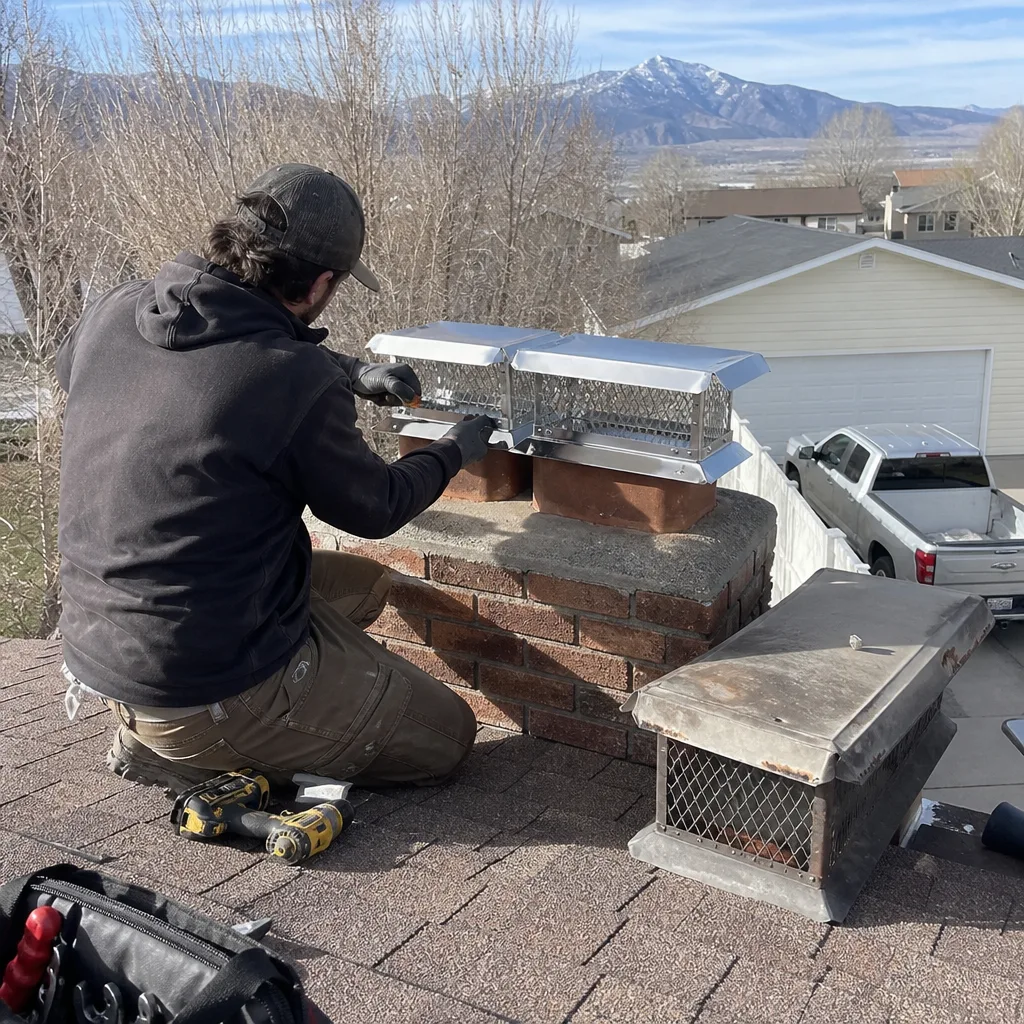
Level 1 sweep and inspection to the NFPA 211 annual standard - flue, crown, cap, and flashing checked and photographed
Chimney sweep logs do not sweep chimneys. They loosen some creosote - which then falls where a brush and vacuum still have to collect it.
DIY vs Professional Chimney Cleaning: The Tooele Homeowner’s Decision Guide
Brush kits and drop cloths give homeowners the feeling of a completed job. The rods go up, the soot comes down, the firebox gets a wipe, and the chimney looks clean from the hearth. But no consumer-grade tool can tell you whether your flue liner has a hairline crack that’s been routing carbon monoxide into the wall cavity for two seasons. That gap, between what looks done and what is actually safe, is where most DIY chimney cleaning goes wrong. This guide lays out exactly which cleaning tasks a Tooele homeowner can legitimately handle, which ones demand professional equipment, and the three variables that decide whether DIY is reasonable for your house or inadvisable.
Quick Answer
You can safely handle light firebox ash removal, brushing off the smoke shelf from below, and clearing leaves or debris from the exterior cap. Everything else, including creosote removal beyond a thin soot film, flue camera inspection, and draft measurement, requires professional equipment and a trained eye. If your flue is older clay tile, if you burn more than a cord or two a season, or if it’s been more than a year since a professional sweep, DIY is not the right call in Tooele.
Styles & brands we work with
- Sweep & inspection
- Caps & crowns
- Flue relining
- Masonry repair
- Gas fireplace service
Table of Contents
- What You Can Legitimately Do Yourself
- What Requires Professional Equipment
- The Three Degrees of Creosote and Why They Matter
- The Liability Problem DIY Cleaning Creates
- Tooele-Specific Risk Factors: Clay Tile Liners and Inserts
- The Decision Matrix: Three Variables That Settle It
- DIY Cost vs Professional Cost in Tooele
- Common Mistakes to Avoid
What You Can Legitimately Do Yourself
There are real cleaning tasks a careful homeowner can do without specialized tools, and doing them well extends the time between professional sweeps. The key is knowing the boundary. Anything below the smoke shelf is largely accessible. Anything above it, especially in the flue itself, is where DIY stops being safe.
Here’s what you can do honestly and effectively:
- Firebox ash removal. Once the firebox is cold (not just out, actually cold), scoop ash into a metal container with a lid. Leave a thin layer of ash on the firebox floor to help insulate the next fire. Empty ash into a metal can, never a plastic bag or cardboard box, and set it away from the house for a day or two before disposing of it. Coals stay live longer than most people expect.
- Smoke shelf debris brushing. The smoke shelf is the ledge just above the damper. Leaves, soot, and even the occasional bird nest collect there. A stiff hand brush and a shop vacuum reach it from inside the firebox. Wear eye protection and a mask rated for fine particulates, because once you disturb soot, it goes airborne.
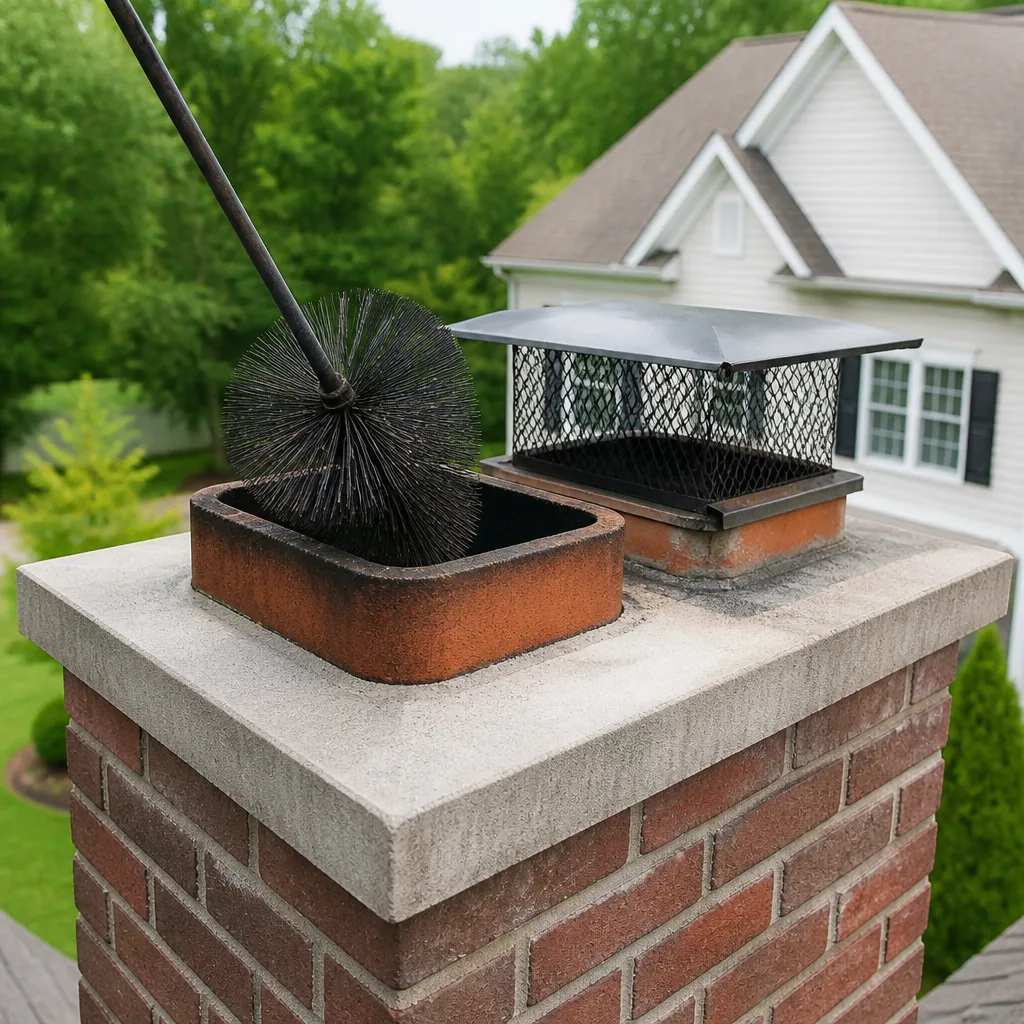
- Exterior cap debris clearing. Leaves, twigs, and bird nesting material lodged in the cap screen block airflow and create a fire risk. From the ground or a stable ladder, you can clear the surface debris with a gloved hand. Do not climb onto a steep roof in Tooele’s wind to do this. A sweep from below with a soft brush on a rod is often enough.
- Glass door cleaning (gas and wood units). Cooled glass cleaner for wood fireplaces, manufacturer-approved cleaner for gas. Caked-on creosote haze on glass is normal and cleans off with patience, not scraping.
- Damper operation check. Open and close the damper by hand a few times each season. If it sticks, grinds, or won’t open fully, note it and let a professional look at it. Do not force it.
The limit is clear: you’re working on surfaces you can see and reach. The moment the task requires pushing a brush up the flue, you’re trusting that the brush is knocking creosote off the liner rather than packing it into cracks or scraping the glaze off a compromised tile. That’s a trust you can’t verify from the firebox, and it’s where DIY chimney cleaning in Tooele regularly runs into trouble.
What Requires Professional Equipment
The professional toolbox exists because the flue is a place you can’t examine visually and can’t judge by feel. Three things in particular are impossible to do correctly with homeowner equipment: stage-2 and stage-3 creosote removal, flue camera inspection, and accurate draft measurement.
Stage-2 and Stage-3 Creosote Removal
Creosote forms in three stages. Stage 1 is a light, flaky soot that brushes off easily. Stage 2 is a hardened, tar-like deposit that clings to the liner wall. Stage 3 is a glazed, brittle, glassy coating that bonds to the flue surface. Stage 1 is within the reach of a homeowner with a standard brush. Stage 2 and stage 3 are not. Removing stage-2 creosote requires rotary equipment that spins at controlled speed to break the deposit free without gouging the liner. Stage 3 often needs chemical treatment to soften the glaze before mechanical removal. A hand brush, in the wrong hand, will chip at hardened creosote and leave most of it in place, and a homeowner has no way to know whether what came down the flue is the whole deposit or just the loose top layer.
Flue Camera Inspection
A flue camera is a small, lit, articulating camera on a flexible rod that goes the full length of the chimney. It reveals the interior of the flue: cracks in clay tile, gaps in mortar joints at the tile seams, offset tiles from a shifted liner, corrosion on a metal liner, and the state of the smoke chamber above the damper. Without the camera, all of these are invisible. A visual inspection from the firebox and the roof surface shows you the outside of the chimney and the underside of the flue opening, but the inside of the flue, where most failures begin, stays hidden. Our professional chimney inspection includes camera work because the flue interior is where the real information lives.
Accurate Draft Measurement
Draft is the negative pressure that pulls smoke up and out of the flue. Too little draft and smoke backs into the room. Too much draft and the fire burns hot and fast, stressing the chimney. Draft is measured with a manometer at specific points along the flue, and the result tells you whether the chimney is sized correctly for the appliance, whether there’s a hidden obstruction, and whether the appliance is safe to operate. You can’t measure draft by watching smoke. You can only measure it with an instrument. A homeowner lighting a test fire and watching for backdraft is guessing, and guessing wrong here can have consequences after the fire is out.
For the full professional chimney sweep side of this, our chimney sweep page explains what a proper sweep includes.
The Three Degrees of Creosote and Why They Matter
Creosote is the unburned wood byproduct that condenses inside the flue. Its form depends on how hot the fire burns, how dry the wood is, how cold the flue runs, and how much air the fire gets. In Tooele, where cold, dry winters and long burn seasons are the norm, creosote accumulation is a real concern, and the type of creosote in your chimney determines whether a homeowner can address it or not.
| Stage | Appearance | Removal Method | Homeowner Capable? |
|---|---|---|---|
| Stage 1 | Light, flaky, soot-like | Standard brush, light pressure | Yes, from below only |
| Stage 2 | Hard, tar-like, clings to liner | Rotary equipment at controlled speed | No |
| Stage 3 | Glazed, glassy, bonded to flue | Chemical softening plus mechanical removal | No |
The reason this matters isn’t academic. Stage-2 and stage-3 creosote are the two forms most associated with chimney fires. Stage 3 in particular ignites at lower temperatures than most homeowners assume. But the risk isn’t only ignition. Hardened creosote that’s been scraped badly by a homeowner brush can flake off in chunks, lodge against a damper, or block airflow in a way that’s hard to detect. Every stage-2 and stage-3 chimney we inspect in Tooele started as a chimney that looked fine from the firebox.
Recognizing which stage is in your flue requires looking at it, and looking at it requires a camera. This is the specific gap where the DIY approach quietly fails: not at the cleaning step, but at the assessment step that should come before it.
The Liability Problem DIY Cleaning Creates
There’s a question that comes up at every home sale, every insurance renewal, and every claim after a chimney fire: what documentation exists that this chimney was professionally serviced, and when. “It looked clean” is not documentation. Neither is “I sweep it myself every fall.” The absence of a professional service record is a liability the homeowner carries, and it shows up at the worst possible moments.
Insurance Companies Want Records
Chimney fire claims are heavily scrutinized. Insurance adjusters routinely ask for proof of annual sweeping and inspection, and a claim can be challenged or denied when there’s no record of professional service. This isn’t punitive. It’s the insurer’s way of confirming the homeowner took the maintenance steps that make a loss less likely. A DIY sweep, however thorough, produces no invoice, no inspection report, and no camera photos. That’s what the adjuster is asking for.
Home Buyers Want Records
When you sell a home in Tooele with a wood-burning fireplace or stove, the buyer’s inspector will flag the chimney, and the buyer will ask for a professional inspection. A documented history of professional service makes that ask simple. A gap in the record triggers a full inspection anyway, usually at the seller’s expense and usually right when the closing clock is running down. The real cost of Do-It-Yourself cleaning isn’t the tools. It’s the missing paper trail, and it gets expensive at exactly the wrong time.
The Paper Trail a Professional Sweep Produces
A professional sweep and inspection produces three things that DIY cleaning can’t: an invoice dated to the service, an inspection report noting the condition of the flue and any issues found, and (with a camera inspection) photographic evidence of what the flue interior looked like on that date. Those three documents protect the homeowner in a claim, satisfy a buyer’s inspector, and give the next sweep a baseline for comparison. That’s the genuine value of professional service, and it’s why we treat inspection as a separate service from sweeping rather than bundling both under one invoice line.
Tooele-Specific Risk Factors: Clay Tile Liners and Inserts
Tooele County has a specific housing profile that makes the DIY question harder to answer than it looks. Older homes with original clay tile flues are common, and so are homes where a wood-burning insert has been added to an existing fireplace. Those two combinations have failure modes that visual DIY inspection routinely misses, and they’re the main reason we treat older Tooele chimneys differently from newer construction.
Clay Tile Liner Failures
Clay tile liners were the standard for decades, and most of Tooele’s older homes still have them. The tiles are stacked in sections with mortar joints between them, and each joint is a potential failure point. Thermal cycling (the flue expanding on a hot fire, contracting as it cools) gradually opens hairline cracks at the joints. From the firebox, the flue looks straight and clean. From a camera 12 feet up, those cracks are visible as gaps that let flue gases and moisture into the wall cavity. A homeowner brushing from below will never see them. A professional with a camera sees them on every third or fourth older Tooele chimney we inspect, and it changes the entire picture of what the chimney needs.
Wood-Burning Insert Complications
An insert changes how the chimney performs. It reduces the flue’s effective cross-section, it changes where creosote condenses, and it often means the original clay liner wasn’t sized for the insert at all. A homeowner who decides to sweep an insert themselves is working on a chimney that was likely re-engineered by a previous owner with no documentation. Is the insert’s connector pipe properly sealed? Is the liner continuous to the cap? Those questions require inspection, not sweeping, and the answer changes what the cleaning even needs to accomplish.
What This Means in Practice
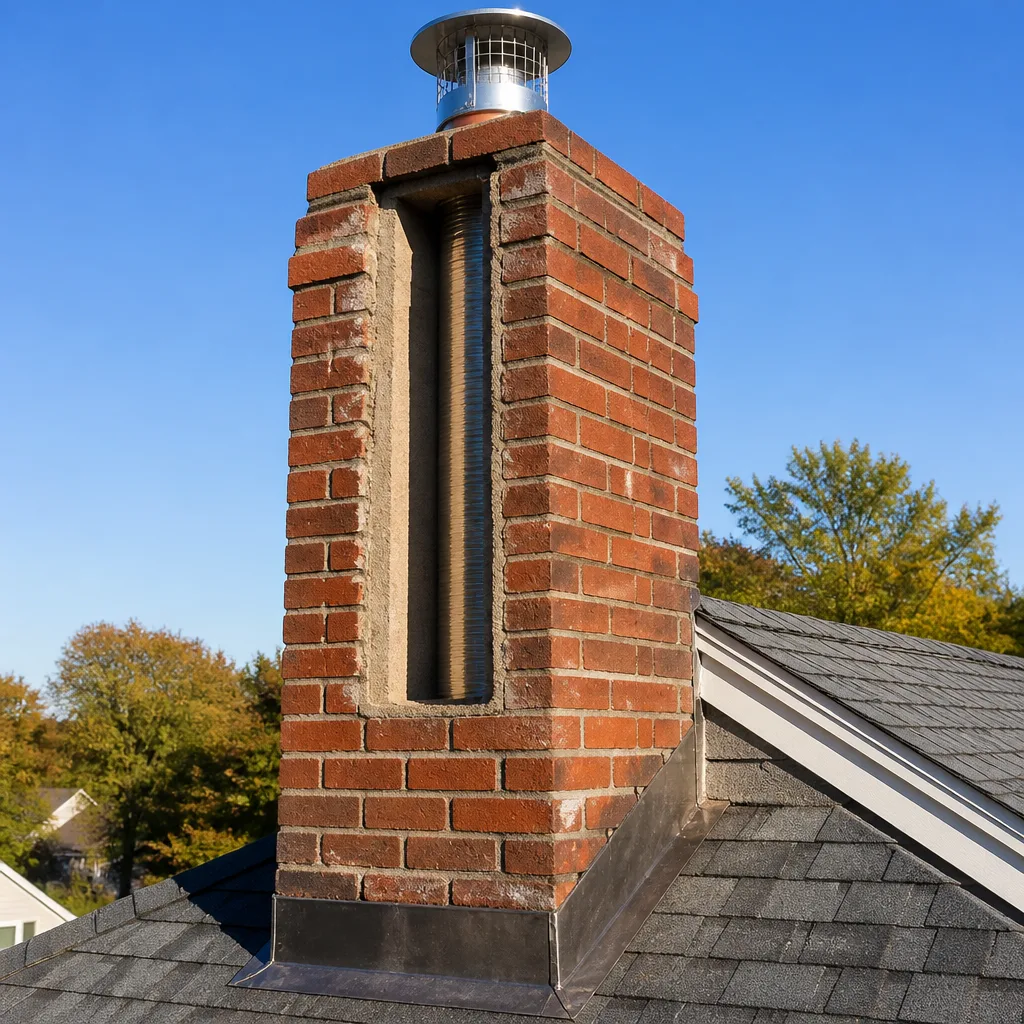
If your Tooele home is older and has a clay tile flue, or if there’s a wood-burning insert anywhere in the system, the decision is made for you: professional inspection comes first, and the cleaning method follows from what the camera finds. HeatShield ceramic liner restoration, which we apply in eligible cases, is a good example of a repair option that exists precisely because clay tile liners fail in ways that only camera inspection reveals. If your liner has cracked joints but is otherwise sound, HeatShield may restore it without the cost of a full relining. If it’s failed more broadly, a DuraFlex stainless system is the standard replacement. Either way, the answer to “what does my chimney need” starts with a professional look, not a homeowner brush.
The Decision Matrix: Three Variables That Settle It
When homeowners ask us whether they can skip the professional sweep this year, we give them three questions to answer for themselves. Burn volume, years since the last professional sweep, and flue age. Those three variables settle it more reliably than any general rule.
- Burn volume per season. A fireplace used a dozen evenings a year is a different chimney than one used as a primary heat source through a Tooele winter. If you burn more than two cords per season, or if your fireplace is the main heat in any part of the house, treat the annual sweep as mandatory. If you light fewer than a dozen fires a season, the annual timeline is still correct, but the urgency of any given spring or fall is lower.
- Years since the last professional sweep. This one is simple. If it’s been more than a year since a professional cleaned and inspected the flue, the next step is a professional sweep, regardless of what the firebox looks like. If it’s been less than a year and the chimney was cleaned and inspected, a homeowner can do intermediate firebox maintenance with confidence between professional visits.
- Flue age and material. A modern stainless flue in good condition with a documented inspection history is more forgiving. A clay tile flue in an older Tooele home is not, because the failure mode is invisible from below. If you don’t know the flue material or haven’t had it inspected, assume the less forgiving case and get it looked at.
Score each variable for yourself. If two or more point toward professional service, that’s your answer. If all three point toward DIY this season, the safest path is still to get a professional inspection at some point and let the report tell you what the flue actually needs. We treat inspection as a standalone service for exactly this reason. It’s information before it’s work.
If the inspection turns up a fireplace problem, our fireplace repair service handles the firebox, damper, and connector side of the system. Structural flue and masonry issues move over to chimney repair. One specialist for both, so the report doesn’t get handed between contractors.
DIY Cost vs Professional Cost in Tooele
A chimney brush kit, drop cloth, mask, and eye protection will set a homeowner back somewhere in the range of $80 to $200 depending on flue size and whether the rods are fiberglass or poly. That’s the honest cost of the kit. The professional sweep in Tooele usually runs $150 to $350 for a standard single-flue cleaning, with camera inspection typically quoted separately. On a straight cost comparison, DIY looks cheaper in year one.
It stops looking cheaper when you price the work a homeowner can’t do.
| Task | DIY Feasible | Typical Professional Range (Tooele) |
|---|---|---|
| Firebox ash removal | Yes | Included in sweep |
| Smoke shelf brushing | Yes, from below | Included in sweep |
| Cap debris clearing | Yes, from ground or ladder | Included in sweep; cap replacement quoted separately |
| Stage 1 creosote removal | Yes, from below only | Included in standard sweep |
| Stage 2/3 creosote removal | No | Rotary sweep quoted per job |
| Flue camera inspection | No | Quoted as part of inspection service |
| Draft measurement | No | Included in inspection |
| Clay tile crack assessment | No | Included in camera inspection |
These are typical ranges, not fixed prices. Every chimney is different, and the written estimate after inspection is what sets the final number. We don’t quote over the phone or take a guess at a chimney we haven’t seen, because a quote based on nothing is a guess, and the homeowner is the one who pays for it later.
The real math is this: a DIY sweep saves the professional fee in year one. If it misses a hairline crack in a clay liner, the resulting repair (via HeatShield restoration or a full DuraFlex reline, depending on what the camera finds) is a multiple of what an inspection would have cost if scheduled early. That’s not a scare tactic. It’s arithmetic. If the flue is sound, an inspection confirms that and the homeowner cleans with confidence for years. If it’s not, catching it early is almost always cheaper than catching it after the liner has failed.
Common Mistakes to Avoid
- Assuming a clean-looking firebox means a clean flue. The firebox is the floor of the chimney. It says nothing about what’s above it. Every cracked clay tile we find in Tooele was hiding behind a firebox that looked fine.
- Brushing a hot flue or a hot firebox. Ash removal must wait until the firebox has cooled completely. A metal container with a lid is the only safe way to move ash. Firebox ash can hold live coals for a full day after the fire appears out.
- Using a homeowner brush kit on stage-2 or stage-3 creosote. A hand brush will chip the surface and leave the hardened deposit in place, and the chipped flakes can lodge in the smoke chamber. If the creosote is hard, stop and call a professional.
- Sweeping an insert without knowing the liner material. If a previous owner installed a wood-burning insert and didn’t leave documentation, the flue is a mystery until it’s inspected. Brushing it blind is worse than not brushing it at all.
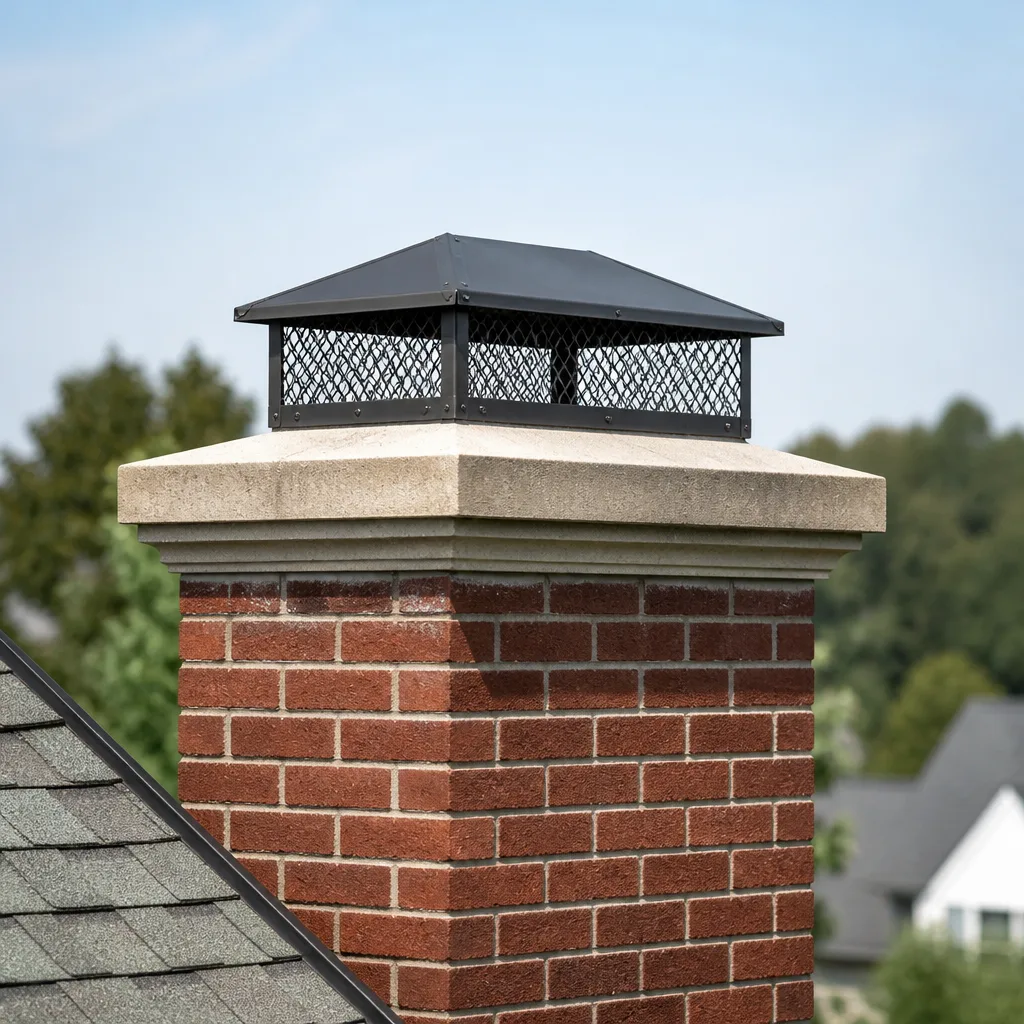
- Treating the cap as out of sight, out of mind. Tooele’s wind and blowing dust drive debris into the cap screen, and blocked screens are a top cause of poor draft and smoke backup. Clear it each season. Replace a damaged or missing cap promptly.
- Skimping on eye and lung protection. Soot is fine particulate, and once disturbed it stays airborne for hours. A properly rated mask and eye protection are not optional for any chimney task, including the ones a homeowner can legitimately do.
- Forgetting to write anything down. If you do a homeowner-level firebox cleaning between professional sweeps, note the date and what you did. The insurance company and the buyer’s inspector won’t care, but the professional on the next visit will, and it tells them exactly what’s changed.
See the difference
 Before
 After
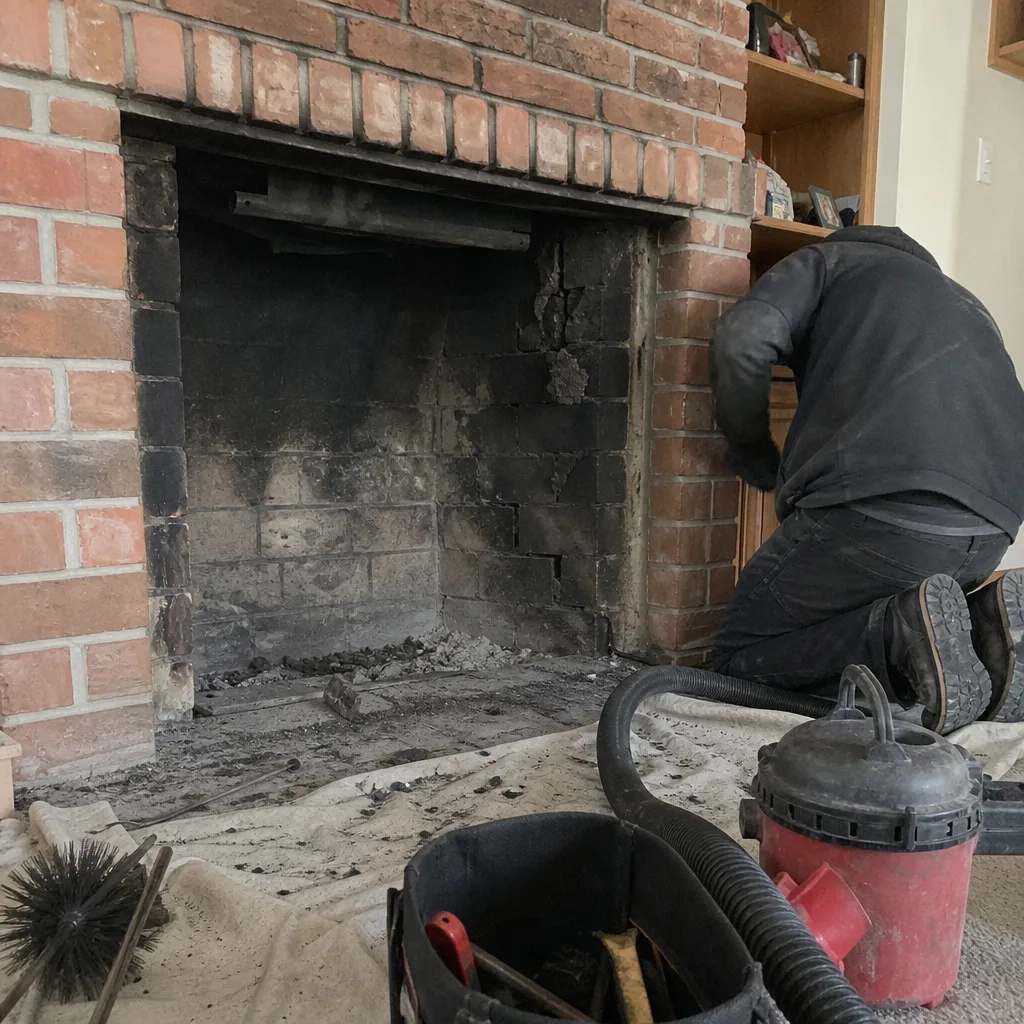 Before
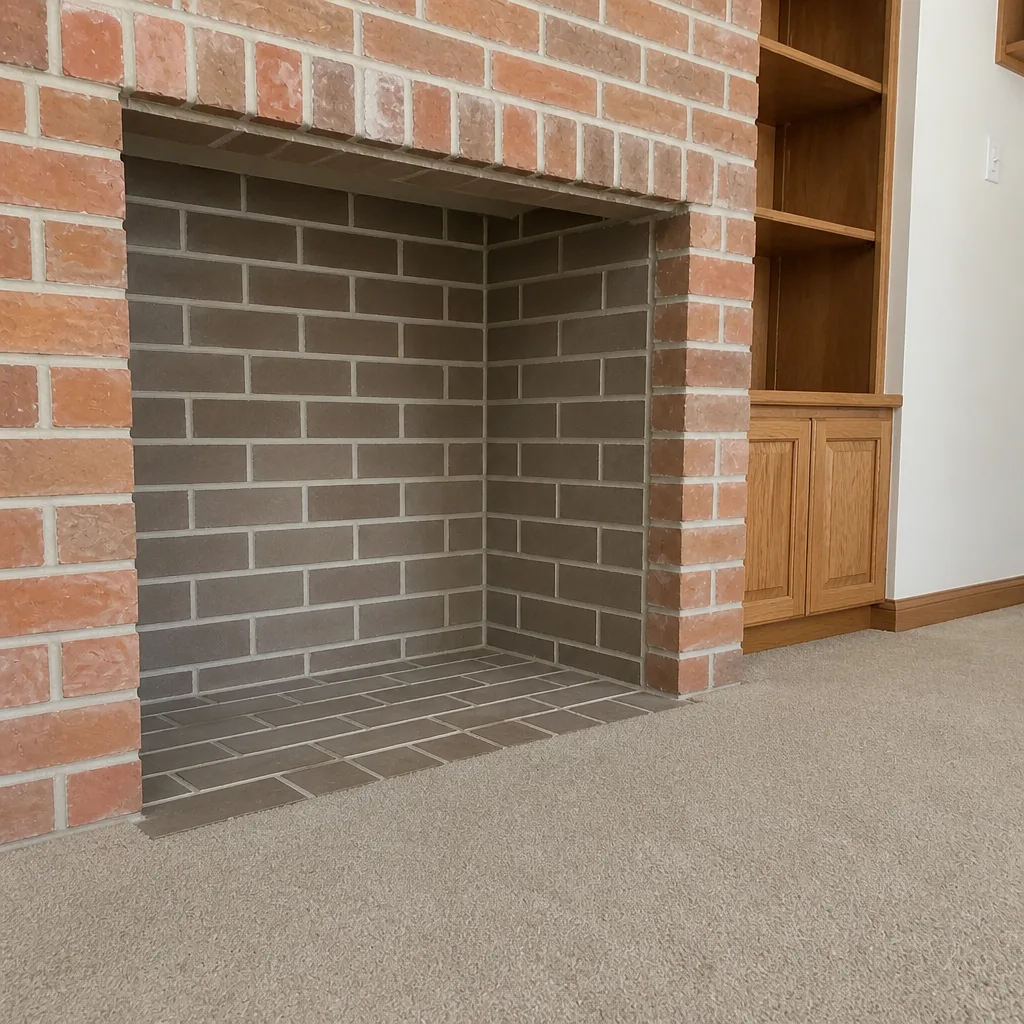 After
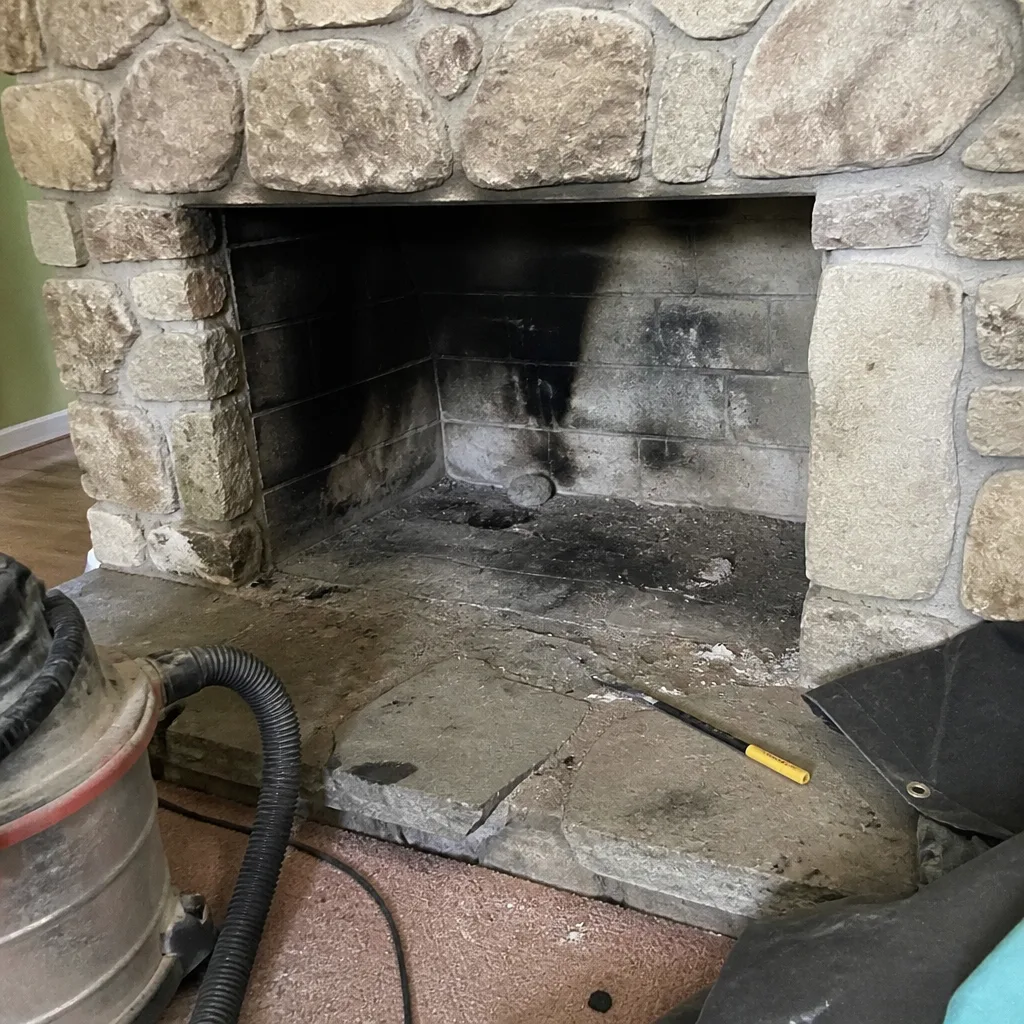 Before
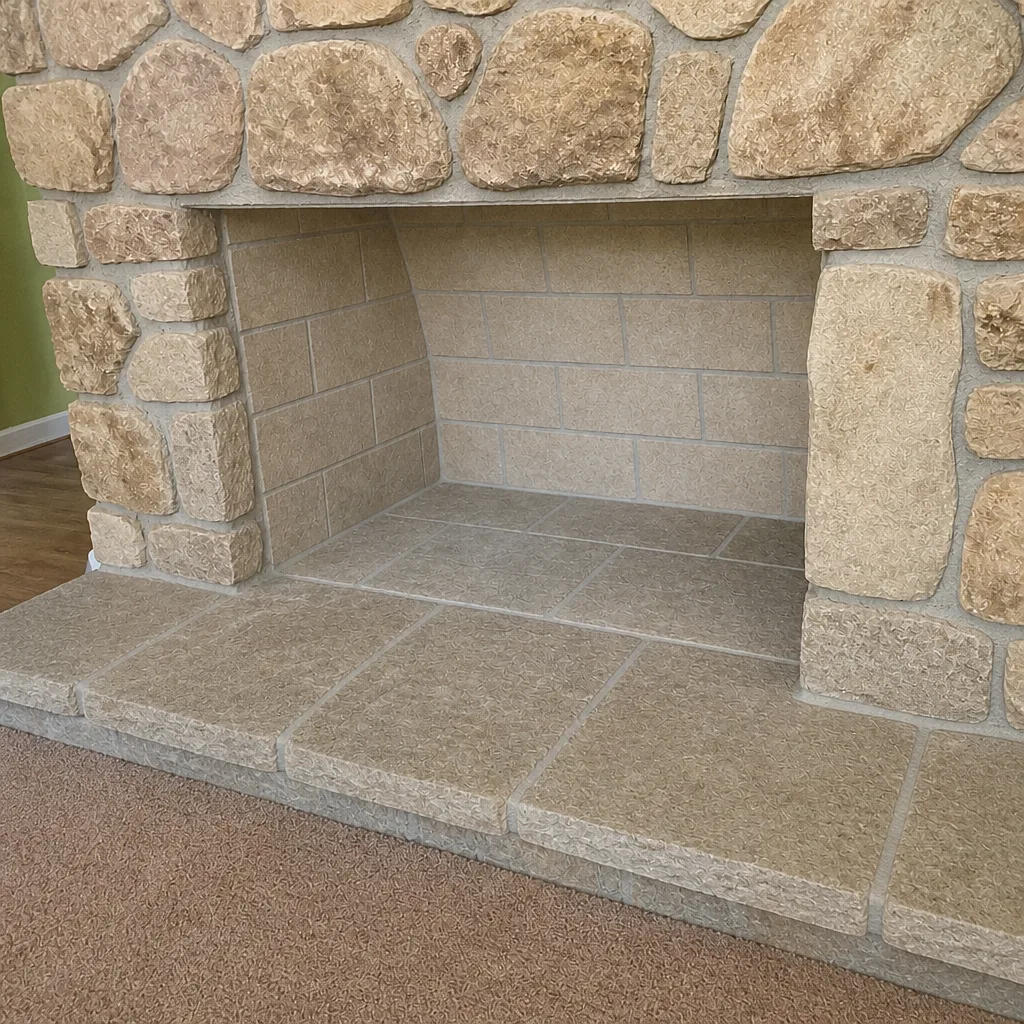 After
When to Call a Professional
The professional call is warranted under specific conditions, and it helps to name them:
- It’s been more than a year since the flue was professionally cleaned.
- The creosote in the flue is hard, tar-like, or glazed.
- The chimney has no cap, or the cap is damaged or missing.
- You’ve noticed smoke backing into the room, a persistent draft problem, or a burning smell when no fire is lit.
- You’re buying or selling a Tooele home and need documentation.
- You have a wood-burning insert with no service history.
- You’ve never had the flue inspected with a camera.
- Your liner is original clay tile and hasn’t been checked.
The inspection is the point where DIY stops and the specialist starts, and it’s the only step that tells you what the rest of the decision should be. Chimney Sweep Tooele provides chimney-only service across sweep, inspection, fireplace repair, chimney repair, and cap and crown installation, all under one specialist so you’re not coordinating a second contractor for the chimney system. Free estimates in Tooele. Call (877) 792-7216. We answer 24/7. Fast dispatch from 7am to 7pm, Sunday through Friday.
Frequently Asked Questions
A standard single-flue sweep in Tooele typically runs $150 to $350, with camera inspection often quoted separately. The written estimate after inspection sets the final price, and it’s per job, not per hour. Call (877) 792-7216 for an exact quote. Estimates are free.
You can safely handle firebox ash removal, smoke shelf brushing from below, and cap debris clearing yourself, but the moment the task involves pushing a brush up the flue, you’ve left the safe DIY zone. The flue is where creosote hardens and where clay tile cracks hide, and neither is visible from the firebox. A homeowner brush will not reliably remove stage-2 or stage-3 creosote.
Not always. A cracked but otherwise sound clay tile liner can often be restored with HeatShield ceramic liner restoration, which we apply in eligible cases, rather than fully replaced. A failed liner is a different story. The only way to know which one you have is a camera inspection. Call (877) 792-7216 to schedule one. Estimates are free.
Once a year is the standard, and in Tooele that’s the right baseline whether your fireplace sees a dozen fires a season or burns daily through the winter. If you burn more than two cords a year or use a wood stove as a primary heat source, don’t stretch the interval. The annual sweep is the baseline, not the ceiling.
Creosote keeps accumulating in the flue, and the form it takes shifts from light soot toward hardened stage-2 and glazed stage-3 deposits, which are the two most closely tied to chimney fires. The other risk is carbon monoxide. A cracked clay tile is one of the main ways flue gases end up in a wall cavity, and no alarm on the firebox side will catch it before it’s a problem. This is the specific reason we treat inspection as a standalone service and camera the flue on older Tooele homes. It’s the only way to know.
Insurance companies look for a documented history of professional service, and a DIY sweep produces no invoice, no inspection report, and no photos. That gap can complicate a claim after a chimney fire. Professional sweeps give you an invoice, an inspection report, and camera photos for your records, which is exactly what an adjuster asks for. Call (877) 792-7216 to start a documented service history. Estimates are free.
The Bottom Line
DIY chimney cleaning in Tooele is reasonable for firebox maintenance and reasonable nowhere above the smoke shelf. The parts a homeowner can do, which are ash removal, smoke shelf brushing, and cap clearing, are worth doing, and they extend the interval between professional visits. The parts that demand professional equipment, including stage-2 and stage-3 creosote removal, camera inspection, and draft measurement, are the parts that determine whether the chimney is safe, and no consumer-grade kit can answer the safety question. Clay tile liners and wood-burning inserts make the Tooele answer a little harder, because their failure modes are invisible from below. The paper trail matters as much as the cleaning. When the decision comes down to whether to book the professional this season, call (877) 792-7216. We answer 24/7. Fast dispatch from 7am to 7pm, Sunday through Friday. Estimates are free.
Written by the team at Chimney Sweep Tooele.