
Last updated November 23, 2026
 Sweep & inspection
 Caps & crowns
 Flue relining
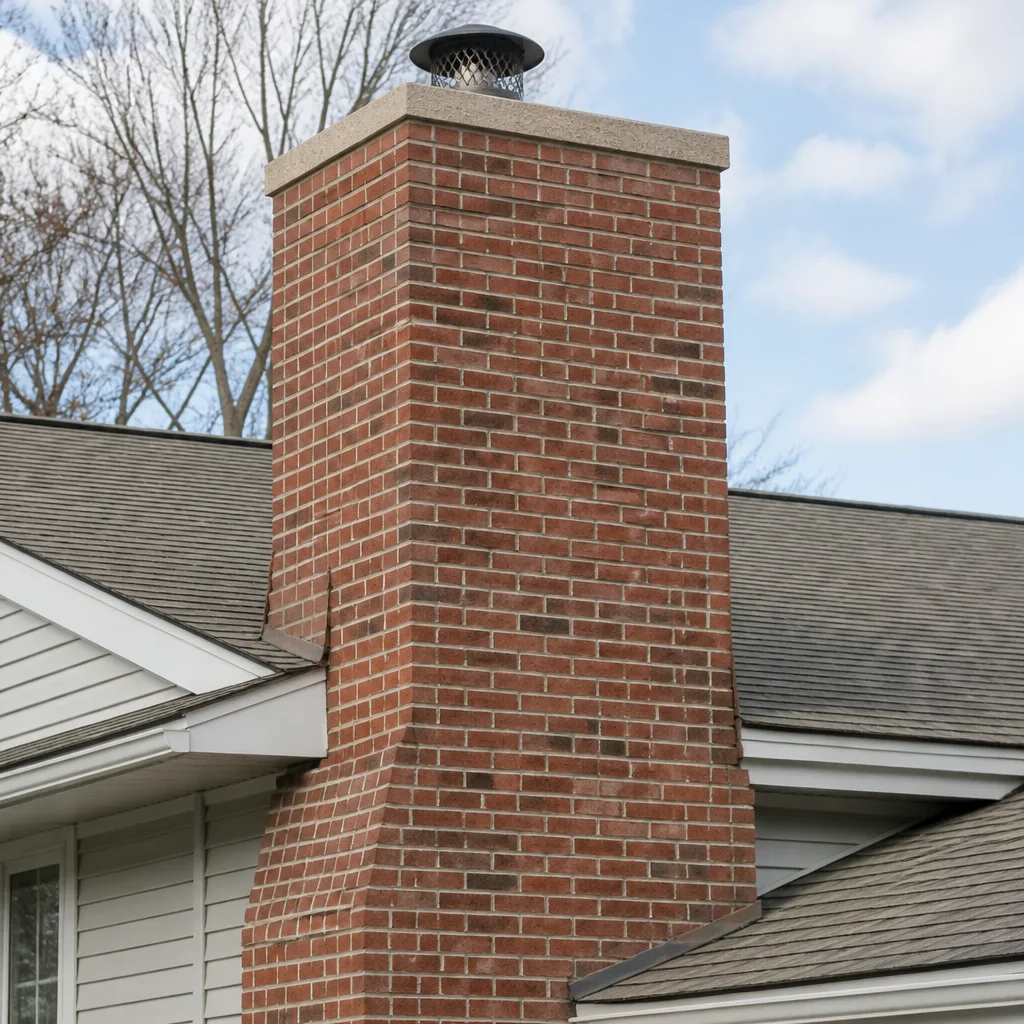 Masonry repair
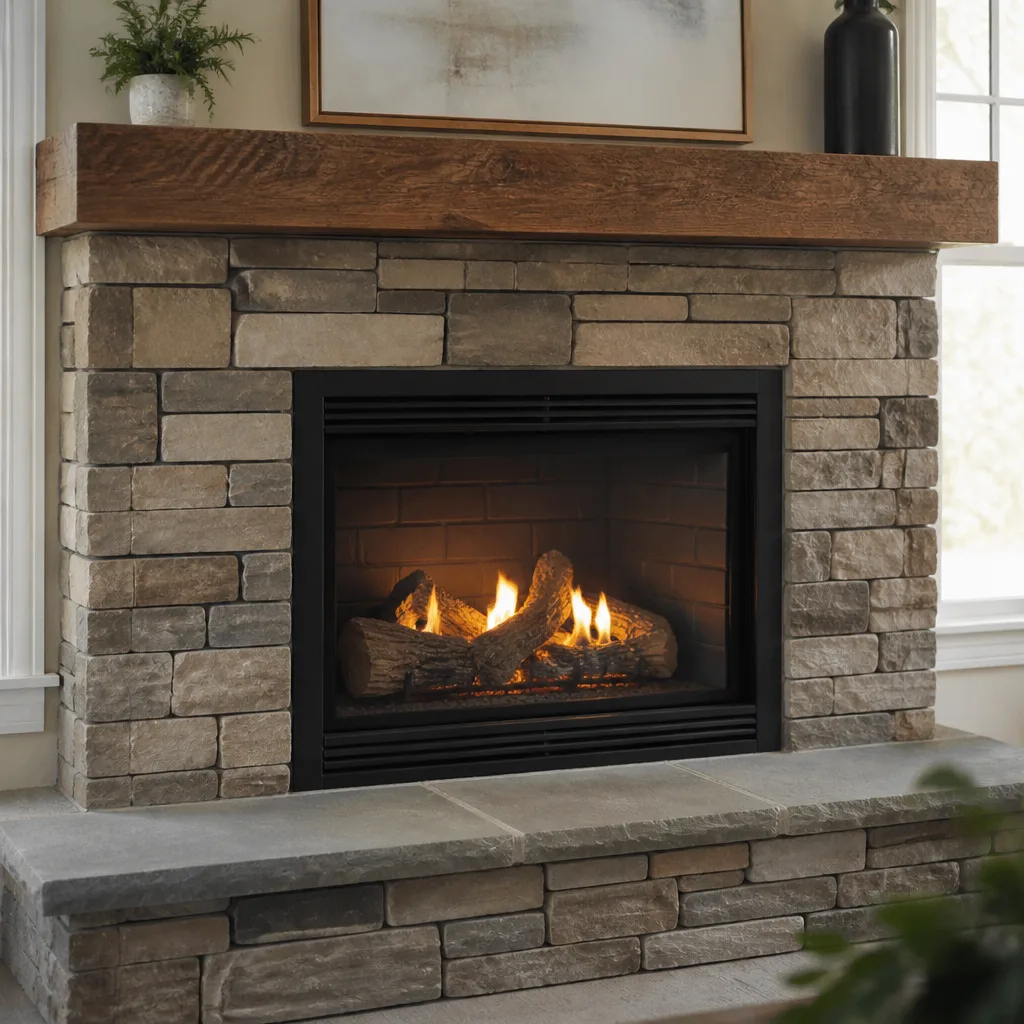 Gas fireplace service
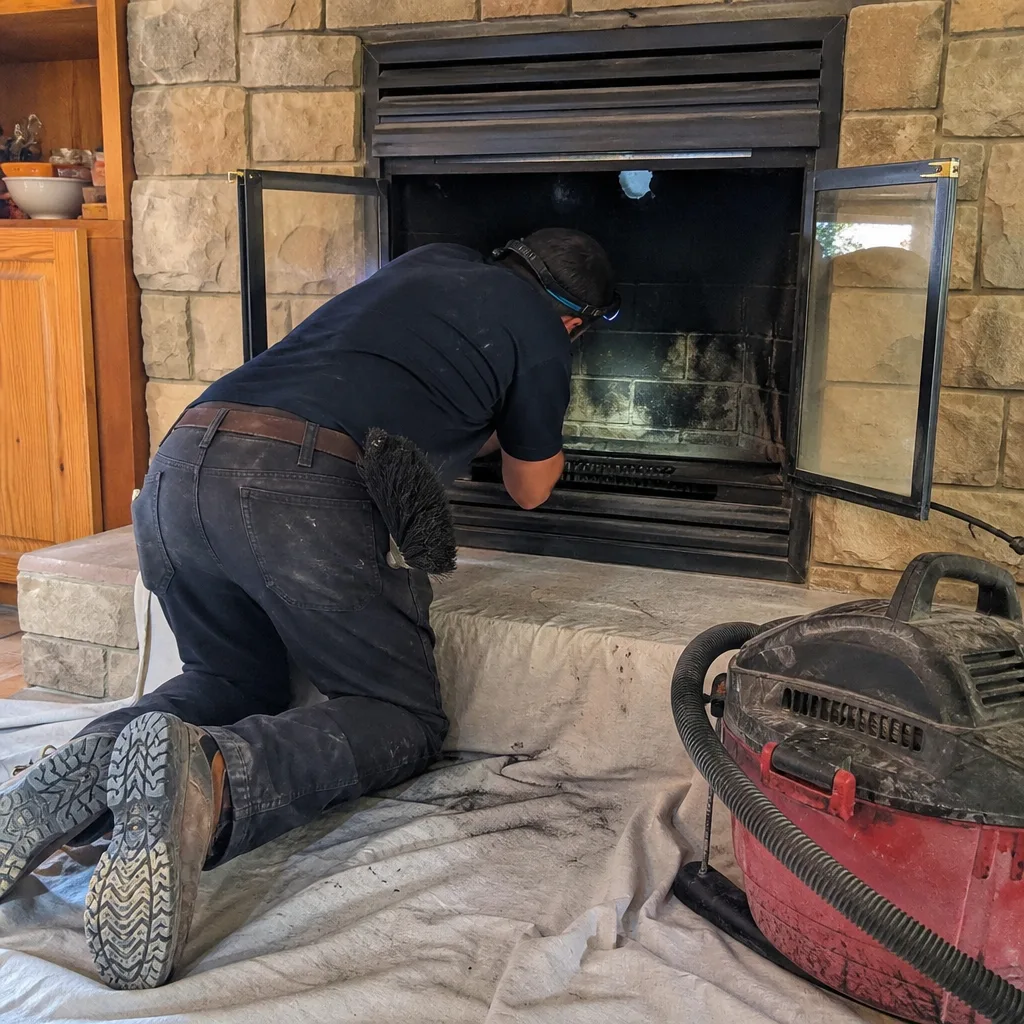
Level 1 sweep and inspection to the NFPA 211 annual standard - flue, crown, cap, and flashing checked and photographed
Chimney sweep logs do not sweep chimneys. They loosen some creosote - which then falls where a brush and vacuum still have to collect it.
The Complete Guide to Chimney Cleaning in Tooele
Most chimney advice you’ll read online was written for a place that doesn’t exist: a flat, temperate suburb where the fire burns a few nights a year and the air always moves. Tooele isn’t that place. This valley sits inside a basin where cold air settles and stays put through the winter, and that single fact changes how a chimney drafts, how completely a fire burns, and how fast creosote accumulates on the flue walls. A chimney that would stay clean for two seasons in a milder climate can build a heavy residue in one here. In this guide we’ll walk through what chimney cleaning in Tooele actually involves, how the local climate shapes the work, what the different inspection levels mean, and how to tell a real flue cleaning from a quick pass with a brush.
Quick Answer
Chimney cleaning in Tooele means removing the creosote, soot, and debris that build up inside a flue, then inspecting the full system to confirm it’s safe to use. For most homes here it should happen once a year, ideally before the heating season begins, and more often if you burn heavily or notice poor draft. A proper cleaning is done with contained equipment and followed by a documented inspection of the firebox, flue, cap, and crown.
Styles & brands we work with
- Sweep & inspection
- Caps & crowns
- Flue relining
- Masonry repair
- Gas fireplace service
Table of Contents
- Why Tooele’s Inversions Change Your Chimney
- Creosote: What It Is and Why It Builds Faster Here
- Pinyon, Cottonwood, and the Local Wood Factor
- Level 1, 2, and 3 Inspections Explained
- What a Real Cleaning Involves
- The Full Service Sequence, Start to Finish
- Specialist vs. Generalist: What Changes
Why Tooele’s Inversions Change Your Chimney
A cold-air inversion is a weather pattern where a layer of warmer air sits on top of colder air trapped near the ground. Tooele County sits in a basin, and through the winter that basin holds the cold air in place, sometimes for days at a stretch. The practical effect on your home is simple and significant: the air outside is dense and heavy, and a chimney that relies on the natural upward pull of warm air moving into colder air has to work against a heavier column pressing down on it.
When draft weakens, several things follow at once:
- Smoke spills into the room instead of leaving through the flue.
- Fires burn cooler and less completely, which means more unburned material leaves the firebox as smoke.
- That smoke condenses on cooler flue walls as creosote, and the layer thickens faster than it would on a well-drafting day.
- The next fire drafts a little worse because the flue is now rougher and narrower inside.
This is why a Tooele chimney can look almost normal from the living room while hiding a stubborn residue layer inside the flue. You can’t see draft loss, but you can feel it: a fire that’s slow to light, a faint smoke smell in the house when you open the stove door, a glass door that soots up quickly. Those are draft signals, and in this valley they tend to appear before the creosote layer gets visibly alarming.
One thing worth knowing about a basin like this: the cold air that settles over the winter doesn’t just affect how the stove burns. It also means your chimney’s exterior faces cold, damp conditions for long stretches, which matters for masonry, caps, and crowns. We’ll come back to that.
Creosote: What It Is and Why It Builds Faster Here
Creosote is the residue left behind when wood smoke cools and condenses on a surface. It isn’t one substance. It forms in stages, and the stages matter a great deal for safety.
- Stage 1 is a thin, flaky soot that brushes away easily. It’s the normal residue of a reasonably clean burn.
- Stage 2 is a crusty, slightly gummy layer that clings to the flue and needs real mechanical effort to remove. It’s where most Tooele chimneys land if they’ve gone a season without sweeping.
- Stage 3 is a shiny, hardened glaze, almost like glass. It’s what happens when stage 2 gets reheated repeatedly. It’s stubborn, it takes specialist tools to address, and it’s the layer you want to catch before it forms.
Good dry wood, a hot fire, and a flue that drafts well keep you in stage 1. Cool, smoldering fires and a draft that’s fighting an inversion push you toward stage 2 and beyond. That’s the local pattern we see year after year: Tooele’s winters are exactly the conditions that accelerate creosote formation, and the response is more frequent checking, not just an occasional brush.
The reason it matters is straightforward. A thick creosote layer inside a flue is a fuel, and it’s fuel in the one part of the house a fire shouldn’t reach. It also narrows the flue, which weakens draft, which makes the next fire burn cooler, which adds more creosote. The cycle only breaks with a cleaning and an inspection.
If you want a routine starting point, our chimney sweep service covers the sweeping and inspection side; the point of the service is to catch the buildup early enough that it’s a maintenance visit rather than a repair.
Pinyon, Cottonwood, and the Local Wood Factor
Most chimney guides assume you’re burning oak, maple, or another hardwood. In Tooele, a lot of firewood comes from what grows nearby and what’s easy to source, and the two most common are pinyon pine and cottonwood. Each burns differently, and each leaves a different residue profile.
Pinyon is a pine, so it’s a softwood. It produces heat quickly and lights readily, which makes it forgiving on a cold morning. What it doesn’t do is burn long and hot the way hardwood does, and resinous softwoods can leave a stickier, soot-heavy residue. Used as a fire-starter or mixed with a hotter-burning wood, it’s fine. Used on its own as the main fuel, it tends to push your flue toward stage 2 faster.
Cottonwood is a hardwood by classification, but it burns more like a softwood: fast, hot, and not the longest-lasting. It dries reasonably well and leaves a lighter, powdery residue than pinyon, but it doesn’t hold a coal bed, so fires built mainly on cottonwood tend to cycle between hot and cooling rather than burning steady.
The practical takeaway is that dry matters more than species. Wood that’s properly seasoned lights easily, burns hot, and leaves less behind. Wood that’s still damp produces more smoke, cools the flue, and adds creosote. If you’ve noticed your stack is sooty one winter and cleaner the next, the wood is often the reason. Split and stacked pinyon and cottonwood dry reasonably well here, but the valley’s dry air doesn’t fix a woodpile that’s been stacked tight and covered on the top only in the wrong way; air circulation is what does the work.
The other local detail is elevation. Tooele sits above four thousand feet, and at higher elevations wood burns less efficiently because there’s less oxygen per breath of air. Less complete combustion means more unburned material heading up the flue. That’s not a reason to stop burning; it’s a reason to keep the flue cleaner and to pay attention to how your fires actually behave.
Level 1, 2, and 3 Inspections Explained
Chimney inspections aren’t one thing. The industry sorts them into three levels, and each is appropriate for different situations. Knowing which one you need is the difference between a routine check and a proper look at what’s actually going on inside the flue.
Level 1 Inspection
A Level 1 inspection is a visual check of the readily accessible parts of the system: the firebox, the damper, the visible portion of the flue, and the exterior top of the chimney if it can be reached safely. It’s what you do during a routine annual sweep, when the appliance hasn’t changed and nothing is obviously wrong. It’s the baseline, and for most homes in Tooele on a yearly schedule it’s the right level.
Level 2 Inspection
A Level 2 inspection goes further and involves a camera run through the flue, plus accessible portions of the attic and crawl space and the exterior. It’s the level you need when something has changed: a new home purchase, a change in appliance, a flue that’s been damaged or cleaned after a chimney fire, or a home inspection that flagged an issue. For a Tooele buyer who’s just gone through inspection on a house with a wood stove, this is the one that tells you what you actually own.
Level 3 Inspection
A Level 3 inspection is diagnostic and potentially invasive. It comes into play when a Level 2 has found a problem that requires access into concealed areas, such as behind a wall, to understand. It’s the rare case, and it’s only called for when the evidence points there.
In our experience, the trick is choosing the level before the visit rather than after. A new homeowner asking for a quick sweep and a current resident asking for an annual clean need different things, and the inspection level is where that distinction lives. If you’re not sure which fits, ask when you book; the answer will shape what the technician brings and how long the visit takes.
What a Real Cleaning Involves
There’s a difference between a quick pass with a brush and a full cleaning, and in a tight Utah home that difference is not academic. A brush pass loosens soot and pushes it around. A proper cleaning contains it. The distinction matters most in a house with a finished basement, a conditioned crawl space, or a living room right beside the fireplace, because any soot that escapes the flue ends up in the air the family breathes.
A full-flue cleaning typically involves:
- Laying down protective coverings over the hearth and floor in the work area.
- Setting up containment or vacuum equipment with a HEPA filter so the dust pulled from the flue is captured rather than circulated.
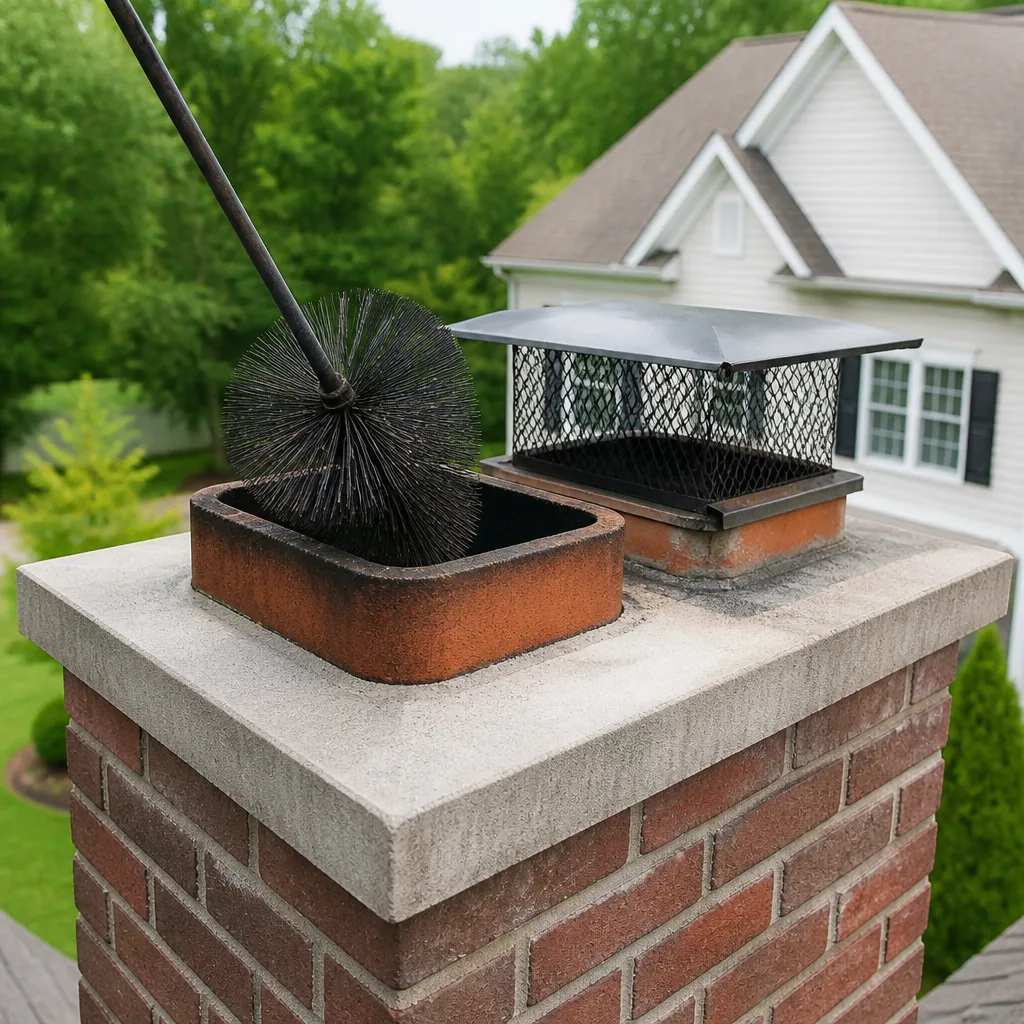
- Running brushes sized to the flue through the full length of the chimney, top down and bottom up as needed, to reach the buildup that a single pass misses.
- Clearing the smoke shelf and smoke chamber, where soot collects out of reach of the brush.
- Removing the debris from the firebox and disposing of it properly.
- Inspecting the firebox, damper, flue, cap, and crown once the flue is clean, so anything hidden under the residue is visible.
The HEPA containment step is the one most often skipped, and it’s the one that most affects how the house feels afterward. It’s also the step that takes time and equipment. When a cleaning is quoted as a very short visit, that’s usually where the shortcut happened. In a basin where the windows stay shut all winter, a little escaping soot is a lot more noticeable than it would be in a mild climate with the house open.
One more point on the firebox side. Fireplace repair isn’t always a separate project from the sweep. If the inspection turns up a damper that doesn’t seal, cracked firebox brick, or a grate that’s failed, those are best addressed before the next fire season rather than at the start of winter. Our fireplace repair work sits alongside the cleaning so a damaged firebox doesn’t sit through a whole season.
The Full Service Sequence, Start to Finish
A chimney-only specialist works a sequence rather than a single service, and that sequence is what makes a single visit actually settle the question of whether a chimney is safe to use. The idea is simple: you can’t repair what you haven’t inspected, and you can’t protect what you haven’t repaired. Here’s how that sequence typically runs for a Tooele home.
- Sweep. Clean the full flue, firebox, and smoke chamber with contained equipment, soot captured rather than released.
- Inspect. Once the flue is clean, examine the firebox, damper, flue lining, cap, crown, and exterior. Camera inspection is included where the inspection level calls for it, and you see what the camera sees.
- Repair. Address what the inspection found. That might be a cracked flue tile, a failed damper, damaged firebox brick, or masonry issues at the top of the chimney. Where the ceramic liner is restorable rather than fully failed, HeatShield ceramic restoration can repair certain liners in place instead of a full reline, which is a specialist capability many generalist providers don’t have.
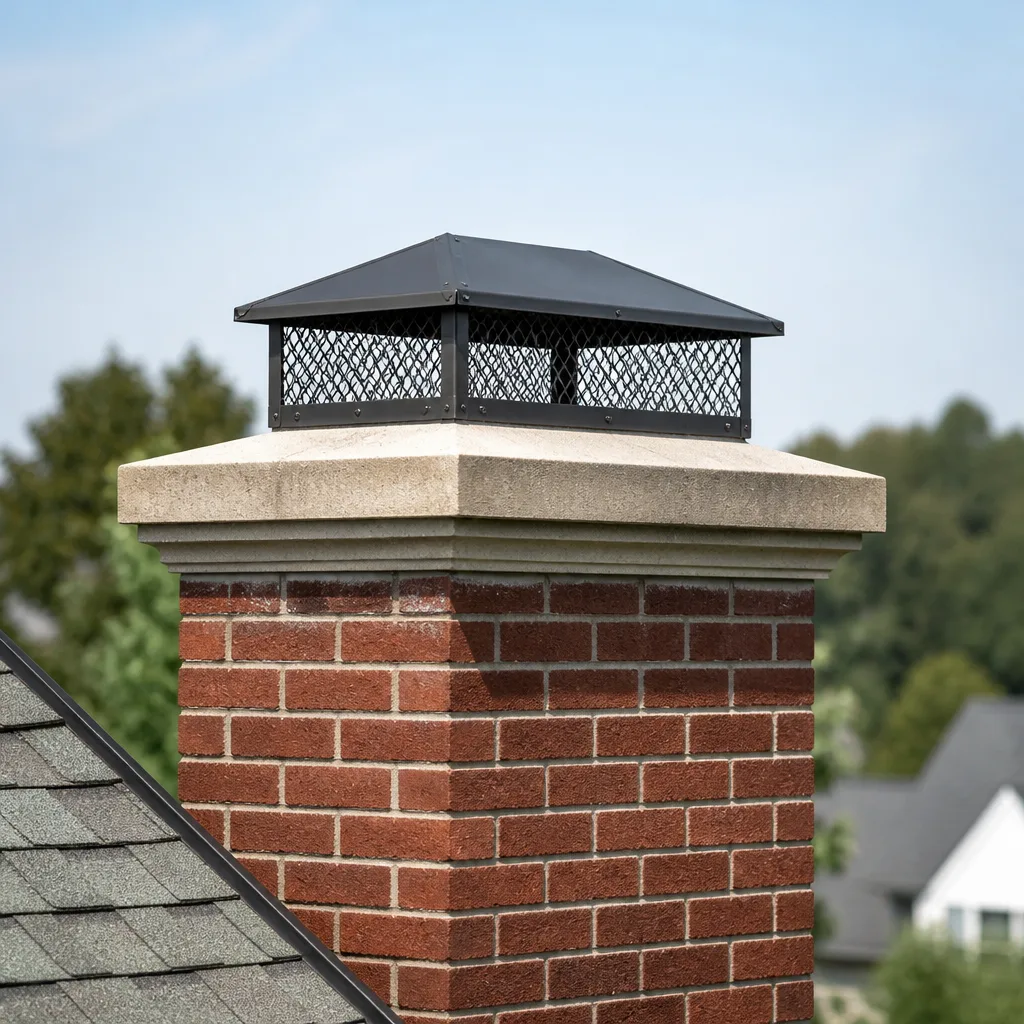
- Protect. Cap and crown. The cap keeps water, birds, and debris out of the flue. The crown seals the top of the masonry, and it’s the leading source of water infiltration that damages chimneys from above. It’s the step that keeps everything below it dry, and it’s treated as a real service, not an afterthought.
- Document. You get a photo report showing what was found and what was done, so you have a record for future visits and any future home sale.
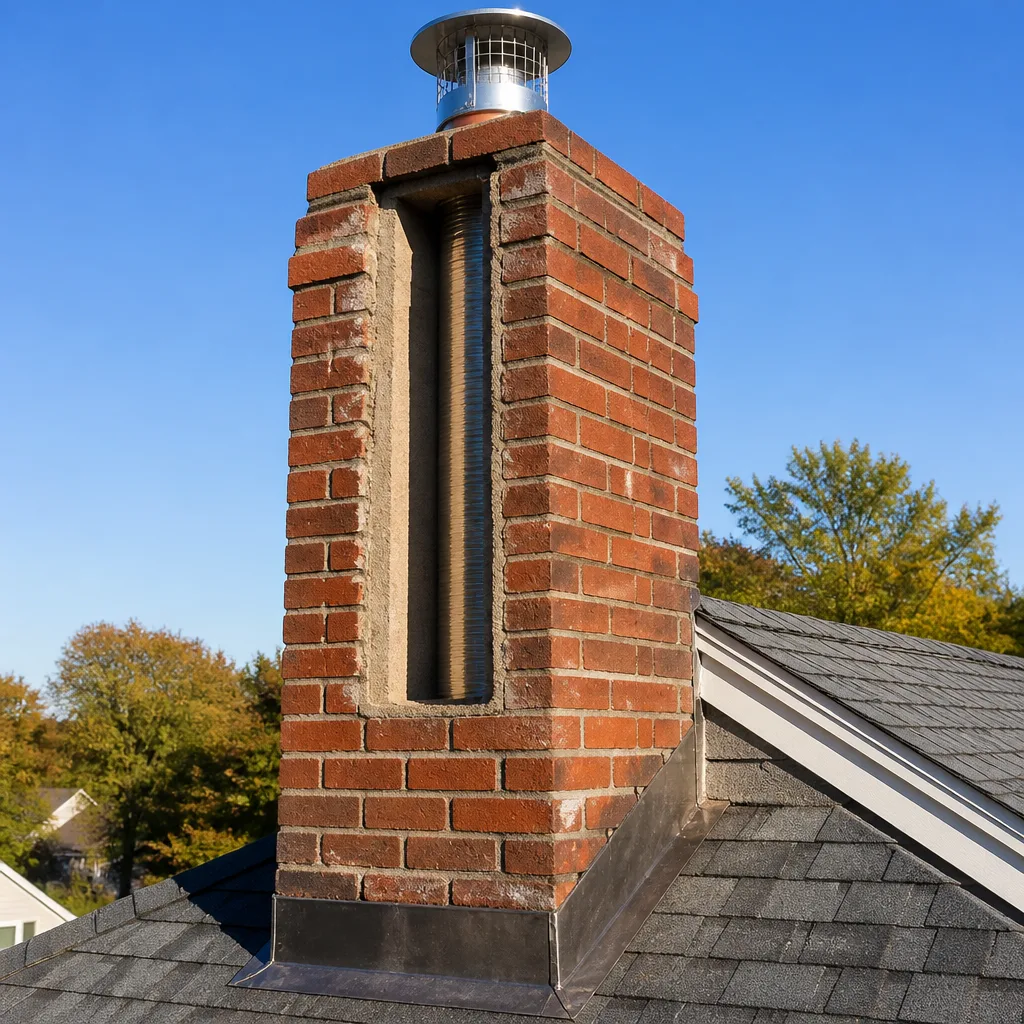
Where a flue lining is beyond restoration, DuraFlex relining is the standard approach, and it’s the kind of installation that needs to be done by a specialist who works with recognized industry materials. The point of the sequence is that the decision between restoration and replacement comes from the inspection, not from a sales conversation before the flue has been looked at. That’s also the answer to the homeowner’s real worry, which is being told a big repair is needed without a way to verify it.
If the inspection turns up structural problems, the next step is the chimney repair side of the work, where masonry, liners, and crowns get handled under the same visit rather than handed to a second contractor.
Specialist vs. Generalist: What Changes
A generalist company adds chimney work to a list that also includes plumbing, roofing, or HVAC. That’s not a knock on their skill in those trades. It’s a statement about how a chimney is built and what it takes to work on one properly. A flue is a pressure-and-temperature system, and the tools that clean it correctly, the materials that repair it properly, and the training that reads its condition are all specific to it.
A chimney-only specialist differs in a few concrete ways:
- Every technician, tool, and material is dedicated to chimney work, not shared with other trades.
- The product brands are chosen from established industry names like Copperfield, Famco, Gelco, Olympia Chimney, and DuraFlex, rather than whatever’s on hand from a general supply shelf.
- Repair decisions come out of the inspection, so the recommendation matches what’s actually wrong with the flue.
- You don’t have to coordinate two contractors for one chimney problem.
For a Tooele homeowner, that last point matters more than it sounds. A chimney issue that touches the flue, the masonry, and the crown at the same time is where the handoffs between trades tend to cause delays and confusion. One specialist handling sweep through cap removes that coordination problem.
Our technicians have up to 12 years of experience, and the work is built around the five core services: sweeping, inspection, fireplace repair, chimney repair, and cap and crown installation. You can see the main entry point on our chimney sweep Tooele page. If your chimney has gone several seasons without attention, or a home inspection just flagged it, the annual sweep is the right place to start, because the inspection that follows it tells you what else, if anything, needs doing.
Common Mistakes to Avoid
- Waiting for a problem to show. Creosote buildup and a failing crown don’t announce themselves. By the time you see a draft problem or a staining on the ceiling, work has usually been needed for a while. The annual sweep is what keeps you ahead of it.
- Treating a brushing as a cleaning. A pass with a brush loosens soot without containing it. Ask whether the flue gets a full cleaning with HEPA containment, and treat a short visit as a question to ask rather than a bargain.
- Ignoring the crown because the flue looks fine. Water entering at the top of the chimney is one of the most common causes of masonry damage, and it’s often invisible from the ground. The crown is part of the system, not a cosmetic detail.
- Burning unseasoned wood through the cold stretch. In a basin that holds its cold air, wet wood burns cool and adds residue fast. Seasoned wood and a hot fire are the cheapest cleaning you can do.
- Assuming the national guide fits Tooele. Advice written for a mild climate with good air movement doesn’t account for the inversion pattern here. Your flue drafts under different conditions than the one in the article.
- Choosing an inspection level by habit. A new home purchase or a change in appliance calls for a camera and a closer look. A Level 1 visual check is right for a routine year, not for a house whose flue you’ve never seen inside.
- Splitting the system across contractors. Sweep here, liners there, cap somewhere else. One specialist handling sweep, inspection, repair, and cap is what closes the loop on a clean, safe chimney.
See the difference
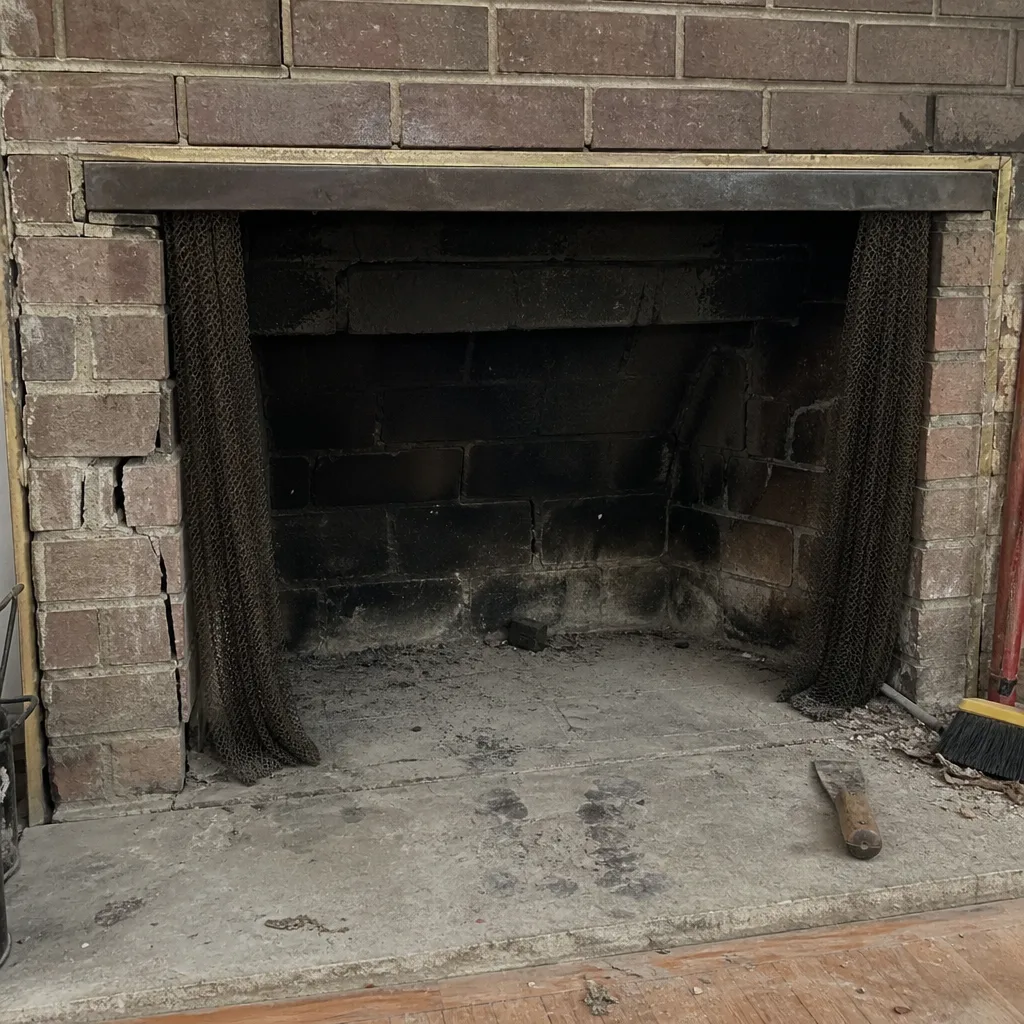 Before
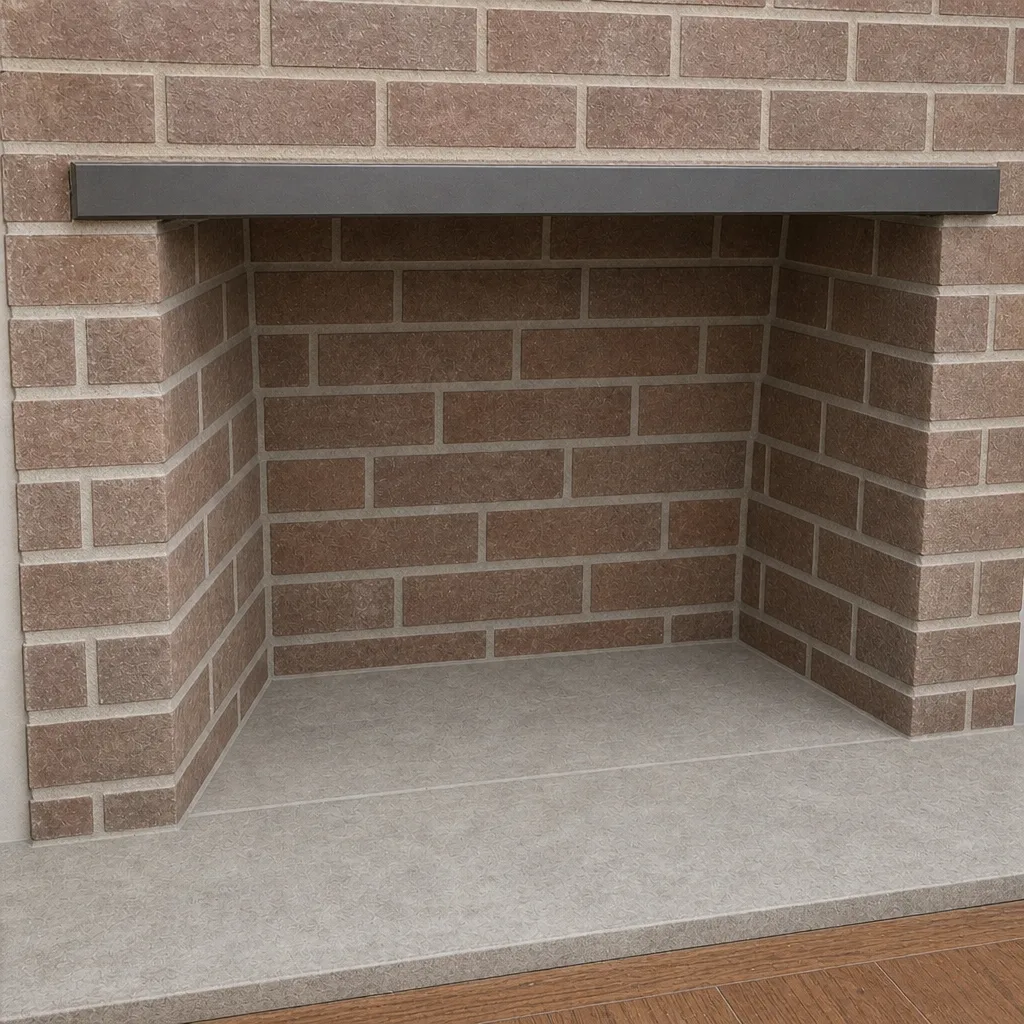 After
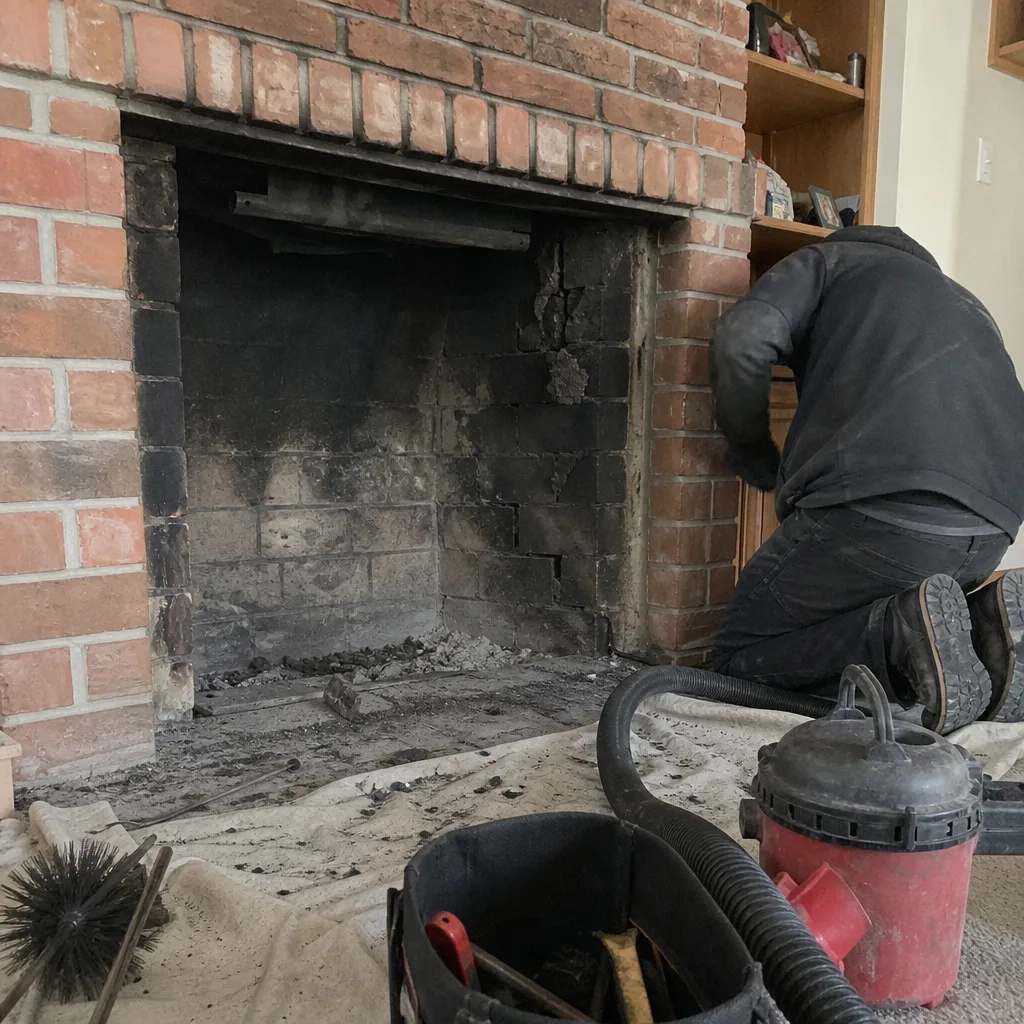 Before
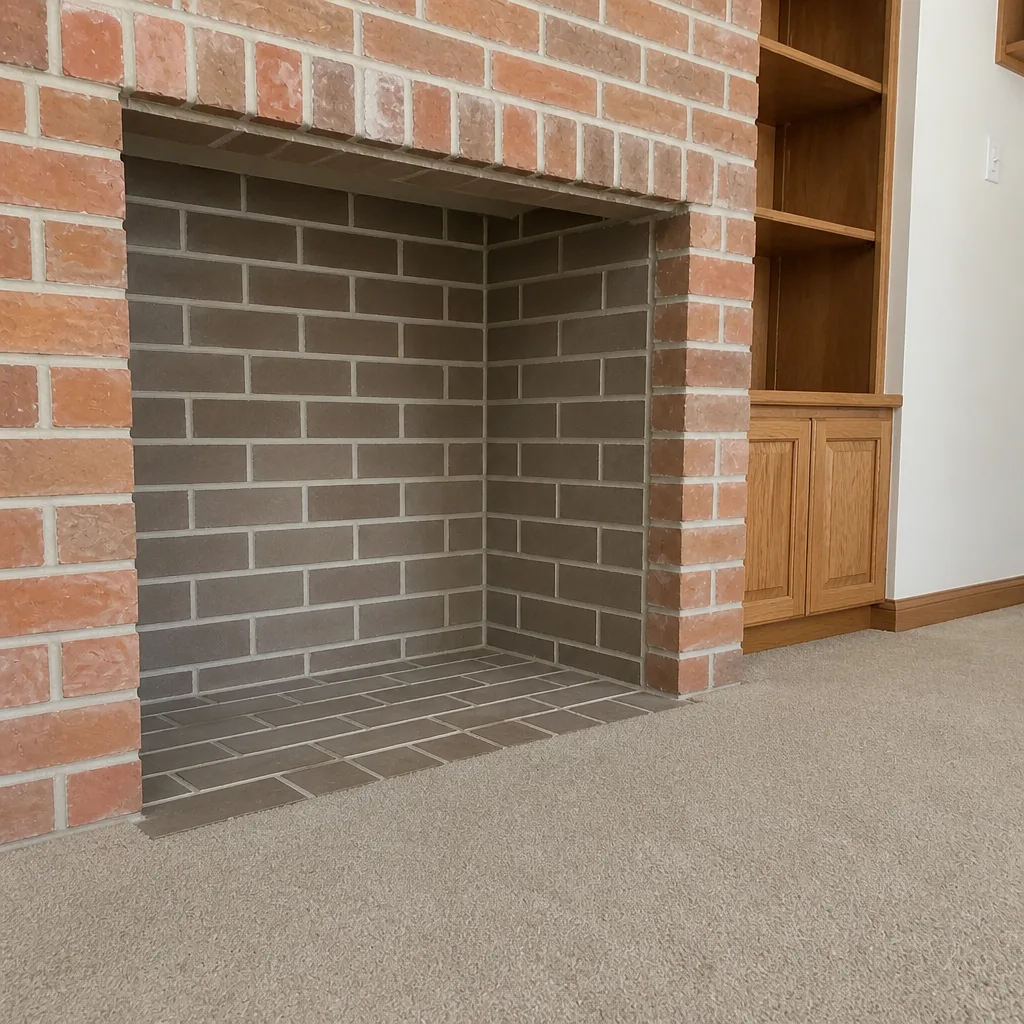 After
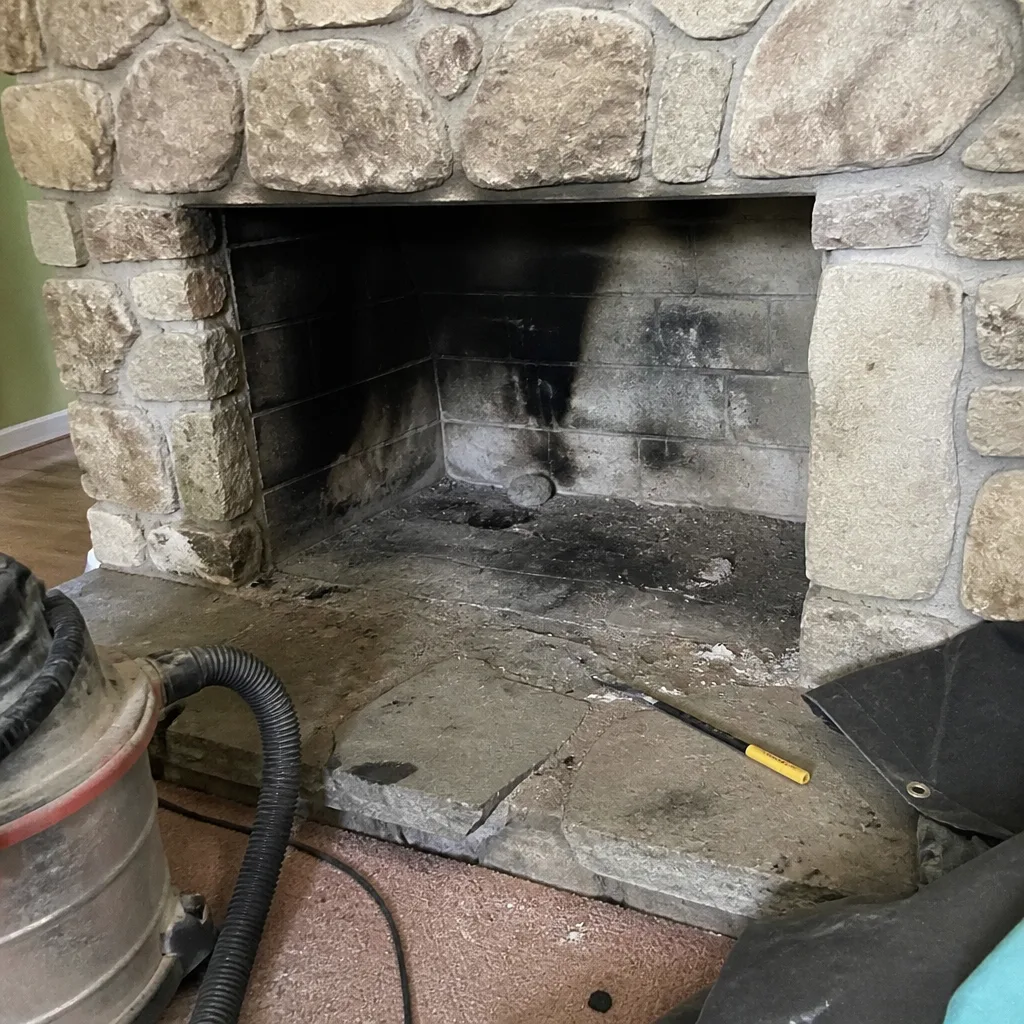 Before
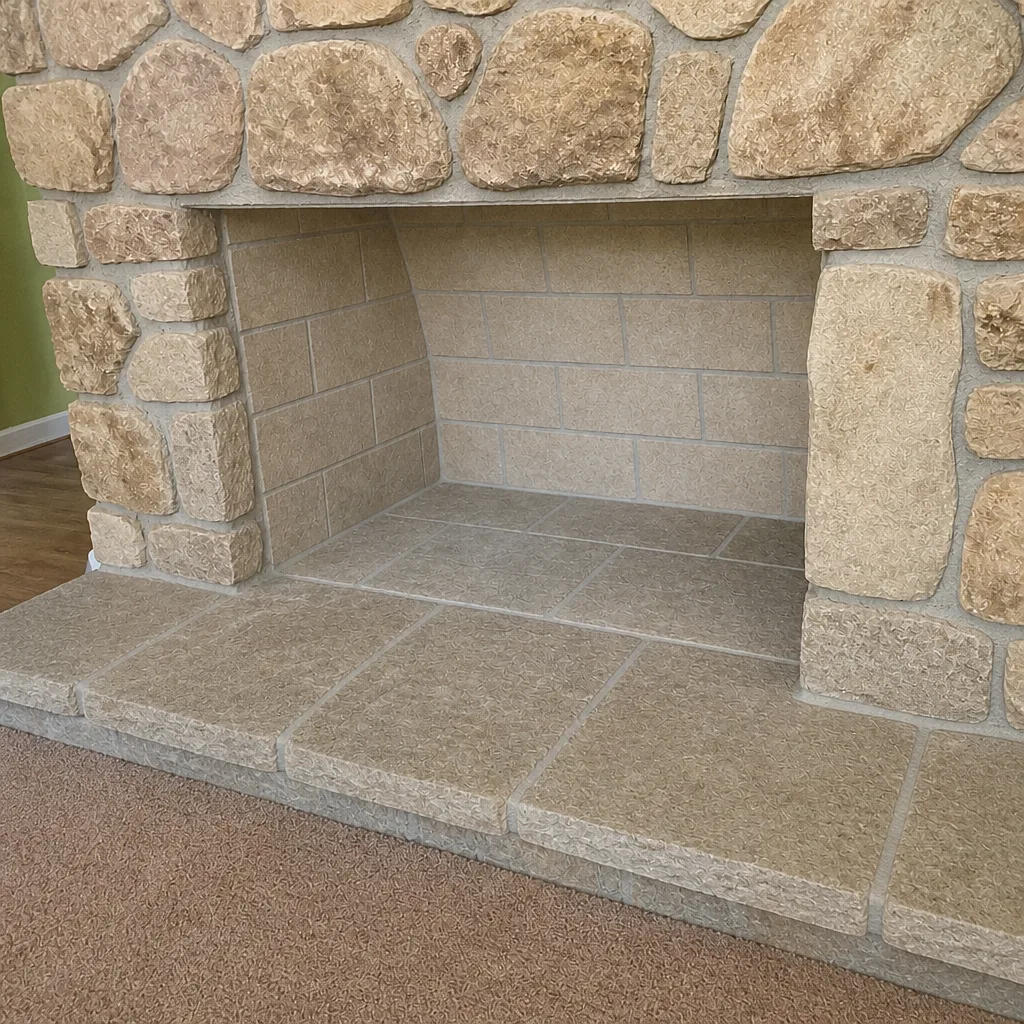 After
When to Call a Professional
Call when it’s been a year since the last cleaning, or when you’ve just bought a Tooele home and don’t know the flue’s history. Call if a smoke smell lingers in the room after a fire, if the stove or fireplace is slow to light, if the glass door soots up quickly, or if a home inspection flagged the chimney. Call if you see staining on ceilings or walls near the chimney, crumbling mortar, a loose cap, or creosote flaking off the flue walls. Call before the heating season rather than during it, since a sweep booked at the change of season is what catches a problem before it decides your winter. Chimney Sweep Tooele offers free estimates in Tooele and the surrounding valley. Call (877) 792-7216. We answer 24/7. Fast dispatch from 7am to 7pm, Sunday through Friday.
Frequently Asked Questions
Once a year for most Tooele homes, and more often if you burn heavily through the winter or notice draft problems. The inversion-prone climate here accelerates creosote buildup, so an annual sweep is the practical baseline rather than the generous one. Call (877) 792-7216 for an exact booking, and estimates are free.
Yes, and the shoulder seasons are the best time to do it. A sweep done before the heating season starts means a clean, inspected flue is ready when the first cold snap arrives, and there’s no scramble during the winter. Call (877) 792-7216 to book before the season.
Weak draft is the most common cause, and in this valley that’s often the inversion layer pressing down on the flue. A flue narrowed by creosote, a closed or blocked cap, and an oversized firebox for the opening all make it worse. A sweep and inspection will identify which of these is yours, and estimates are free.
A visual sweep loosens soot with a brush; a full flue cleaning contains the debris with HEPA equipment and reaches the smoke shelf and the full length of the flue. In a tight, closed-up Utah house, containment is what keeps soot out of the air you’re breathing. It’s worth asking which one you’re getting when you book.
If you’ve just bought the home, changed appliances, or the chimney has been through a fire or suspected fire, yes. A routine annual sweep on a stable system usually calls for a Level 1 visual check. The camera is what turns “looks fine from below” into an actual answer, and the photo report lets you see what the technician saw. Call (877) 792-7216 to book and to confirm which inspection fits your situation.
Sometimes. Where the ceramic liner is cracked or damaged but still sound enough overall, HeatShield ceramic restoration can repair certain liners in place, which is a specialist service rather than a standard sweep-and-clean offering. Where the liner is beyond restoration, a full reline with DuraFlex is the standard route. The inspection decides which. Estimates are free, and you’ll see the camera evidence before any work is recommended.
The Bottom Line
Chimney cleaning in Tooele isn’t the same job it is in a milder climate. The basin’s cold-air inversions weaken draft, cool your fires, and push creosote toward stage 2 faster than a national guide would predict. Local wood, elevation, and the way homes are sealed up for winter all matter too. The practical response is the same every year: an annual sweep with real containment, followed by an inspection that shows you what the camera sees, and a repair-and-protect step that keeps the flue and the crown in working condition. Sweep, inspect, repair, protect, document. One specialist can carry that whole arc, and that’s what a chimney-only trade is for.
Ready to get your flue on a clean yearly footing? Call Chimney Sweep Tooele at (877) 792-7216 for a free estimate. We answer 24/7. Fast dispatch from 7am to 7pm, Sunday through Friday.
Written by the team at Chimney Sweep Tooele.